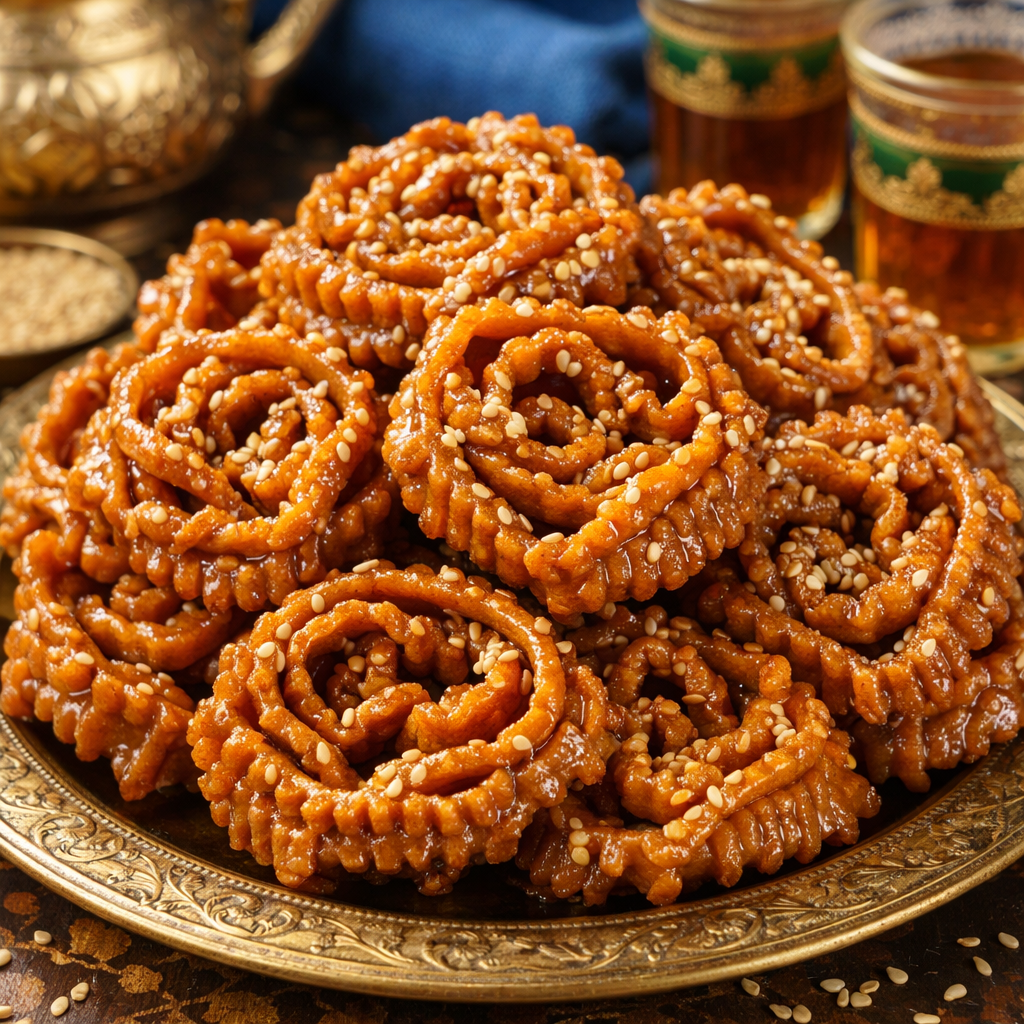
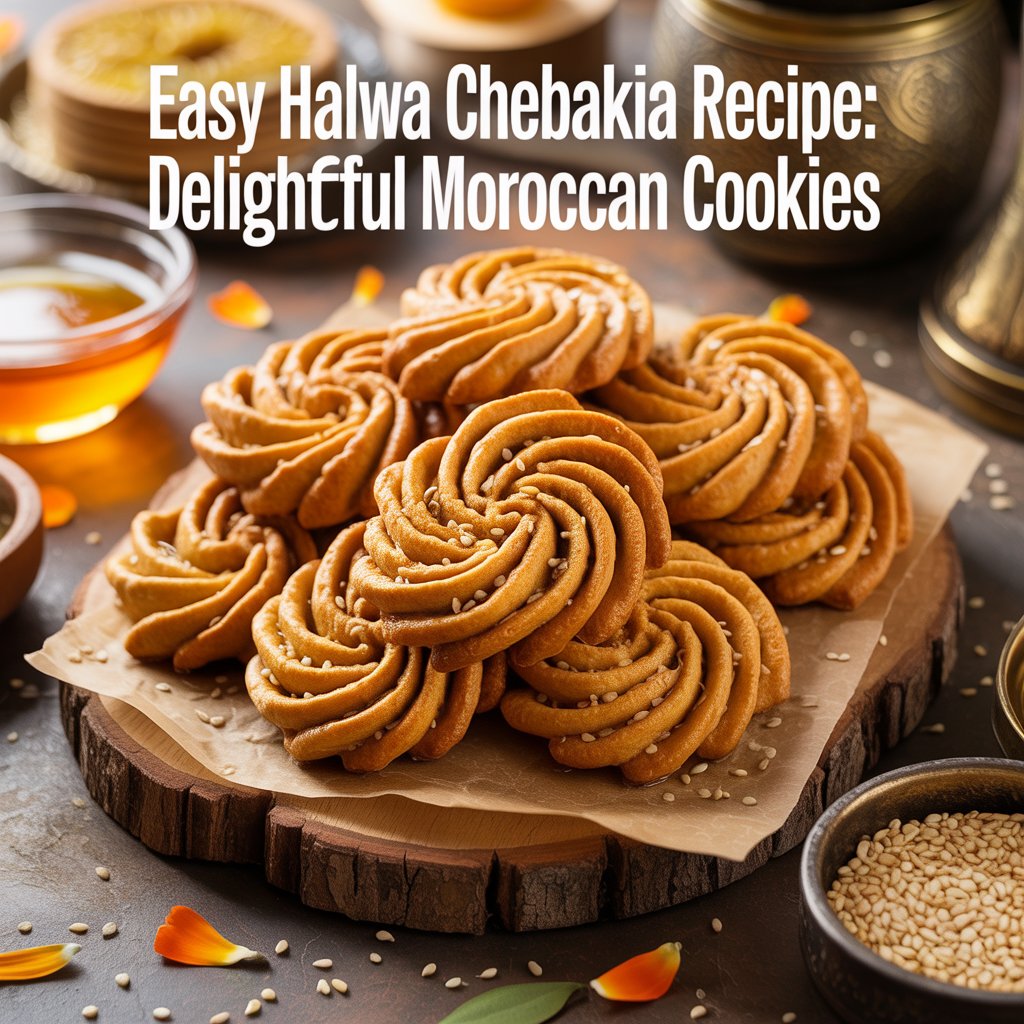
The smell of honey-coated cookies fills the kitchen, taking you to Morocco’s lively streets. During Ramadan, families come together to make halwa chebakia. This sweet dish connects them through its detailed making and deep cultural meaning.
Picture a kitchen full of laughter and the scent of sesame and honey. Every move in making the Moroccan chebakia tells a story of tradition. These delicate cookies are more than a snack. They celebrate Moroccan heritage and unite families during important times.
Making a real traditional halwa chebakia needs patience, skill, and respect for cooking traditions. Whether you’re an experienced baker or just starting, this recipe will help you make a memorable Moroccan treat.
Key Takeaways
- Chebakia is a traditional Moroccan cookie deeply connected to Ramadan celebrations
- The recipe involves intricate shaping and honey coating techniques
- Sesame seeds provide both flavor and nutritional benefits
- Preparation is a labor of love, often taking 1-2 hours
- These cookies are typically served during Eid and special family gatherings
Understanding Traditional Moroccan Chebakia
Chebakia is more than a sweet treat in Moroccan cuisine. It holds deep cultural meaning, especially during Ramadan. Making chebakia at home reveals a recipe filled with tradition and family ties.
History and Cultural Significance
Chebakia’s roots go back generations in Moroccan cooking. It’s not just a dessert but a sign of community and shared moments. Moroccan women come together to make it, turning the recipe into a family bonding event.
Chebakia During Ramadan
In Ramadan, chebakia is a key part of Moroccan homes. Families make lots of these honey-soaked cookies to enjoy with harira soup. This tradition brings generations together, making the cookies a special ritual.
“Chebakia is not just a cookie, it’s a celebration of Moroccan culinary tradition.”
Regional Names and Variations
Chebakia ingredients can change in different Moroccan areas, showing local tastes and traditions. Some places add special spices or change the honey-soaking method, making each region’s chebakia unique.
| Region | Unique Characteristic |
|---|---|
| Fez | Extra saffron infusion |
| Marrakech | More intense honey coating |
| Casablanca | Additional ground anise |
Exploring chebakia’s cultural depth makes cooking it a journey through Moroccan tradition, not just a recipe.
Essential Ingredients for Authentic Halwa Chebakia Recipe
To make the best chebakia, start with top-notch ingredients. These ingredients are key to capturing the true taste of this Moroccan treat. They add rich flavor and texture to these cookies.
The core of a simple chebakia recipe is its ingredients. Here’s what you’ll need:
- Unhulled sesame seeds (1/2 cup ground, 1/4 cup for garnish)
- Flour (2 cups)
- Active dry yeast (1/2 tablespoon)
- Saffron threads (6-8 crushed)
- Orange blossom water (2 tablespoons for dough, 4 for honey topping)
- Egg yolk (1)
- Baking powder (1/2 teaspoon)
- White vinegar (1/2 teaspoon)
The secret to chebakia is its special spice and seed mix. Professional bakers know that toasting sesame seeds at 400°F for 10-15 minutes adds amazing flavor.
| Ingredient | Quantity | Purpose |
|---|---|---|
| Sesame Seeds | 3/4 cup | Adds nutty flavor and texture |
| Orange Blossom Water | 6 tablespoons | Provides distinctive Moroccan aroma |
| Honey | 2 cups | For final sweet coating |
Pro tip: The quality of your ingredients directly impacts the final taste of your chebakia. Always choose fresh, premium components for the most authentic experience.
When making your chebakia, remember each ingredient is important. The mix of sesame, saffron, and orange blossom water gives this Moroccan cookie its unique taste.
Kitchen Tools and Equipment Needed
To make a traditional chebakia, you need the right kitchen tools. Whether you’re new or experienced, the right utensils make baking fun and easy.
Essential Cooking Equipment
For authentic Moroccan halwa chebakia, you need specific tools. Here’s what you’ll need:
- Large mixing bowls
- Wooden rolling pin
- Deep heavy-bottomed skillet
- Pastry wheel or special chebakia cookie cutter
- Long-handled metal slotted spoon
- Kitchen thermometer
- Cooling rack
Traditional vs Modern Utensils
Traditional Moroccan kitchens use wooden tools. Modern kitchens prefer stainless steel and silicon. Both are great for making chebakia.
| Traditional Tools | Modern Alternatives |
|---|---|
| Wooden mixing spoon | Silicone spatula |
| Clay mixing bowl | Stainless steel mixing bowl |
| Hand-carved rolling pin | Adjustable rolling pin |
Workspace Preparation
Before starting, make your workspace clean and organized. Clear your counter, gather ingredients, and make sure you have good lighting and air.
Safety Considerations
Working with hot oil and honey is dangerous. Always wear oven mitts, have a fire extinguisher ready, and never leave hot oil alone.
“Preparation is the key to successful cooking” – Moroccan Culinary Wisdom
Preparing the Sesame Seeds and Spice Mixture
Starting your homemade chebakia journey means preparing sesame seeds and spices. This step turns simple ingredients into a tasty dessert. It captures the heart of Moroccan sweets.
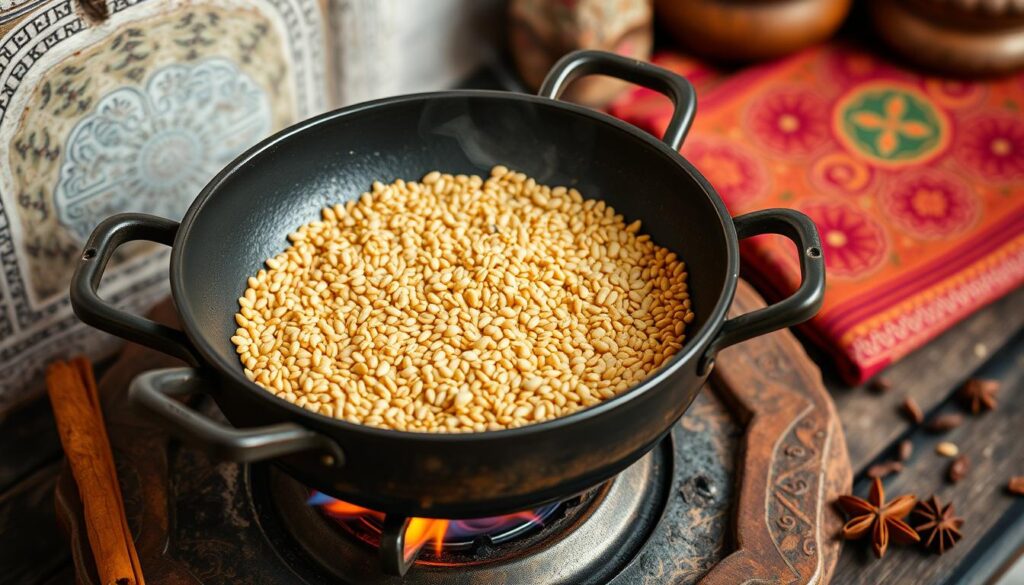
To toast sesame seeds, use a dry skillet over medium heat. Stir constantly to avoid burning. Aim for a light golden color and a nutty smell.
“The secret to an exceptional chebakia lies in perfectly toasted sesame seeds and a well-balanced spice blend.” – Moroccan Culinary Traditions
Your spice mix is key to the flavor. Here’s what you need:
| Spice | Quantity | Purpose |
|---|---|---|
| Ground Anise | 1/2 tsp | Adds distinct licorice-like flavor |
| Ground Cinnamon | 1/2 tsp | Provides warm, sweet undertones |
| Saffron | Pinch | Brings rich color and delicate aroma |
Here are tips for your spice mix:
- Grind whole spices fresh for maximum flavor intensity
- Sift spices to remove any large particles
- Store ground spices in an airtight container to maintain freshness
Grind sesame seeds until they’re slightly moist and powdery. This texture helps bind the dough. It makes your chebakia taste truly Moroccan.
Step-by-Step Dough Preparation
Making the perfect dough is key for a great halwa chebakia recipe. You need to pay close attention and use the right techniques. This will make your cookies taste amazing.
Mixing Dry Ingredients
First, get your dry ingredients ready. You’ll need 4 cups of flour, about 510 grams. Make sure to sift it well to avoid lumps. Then, create a well in the flour for the wet ingredients.
- Measure flour precisely
- Sift to remove clumps
- Create a central well for wet ingredients
Incorporating Wet Ingredients
Now, add the wet ingredients to your dough. Start by dissolving 1 teaspoon of active dry yeast in 1/4 cup of warm water. Then, mix in 1/3 cup of orange flower water and 1/4 cup of olive oil.
Kneading Techniques
Kneading is important for the dough’s texture. You can either knead by hand or use a stand mixer. Hand kneading takes 7-8 minutes, while a stand mixer does it in 4-5 minutes.
*The key is to create a dough that’s firm but pliable, capable of stretching without breaking.*
Once kneaded, let the dough rest for 15 minutes. This helps the gluten relax. It makes the dough easier to shape into your Moroccan cookies.
Shaping and Folding Techniques
Learning to shape traditional halwa chebakia needs precision and practice. You’ll see how to make chebakia at home and its unique flower-like design. This design is what makes these Moroccan cookies so special.
Your chebakia step by step recipe starts with rolling the dough to ⅛ inch thickness. Bakers suggest making a grid of small squares, each 3.25 inches by 3.25 inches. The secret to perfect shaping is in your folding technique.
- Start with a rectangular dough piece
- Make precise cuts along the edges
- Gently fold the corners inward
- Create a flower-like pattern
The folding process needs a gentle touch. Pinch the center and edges carefully to maintain the intricate design. Make sure each fold is crisp and defined. This helps the chebakia keep its shape when fried.
Patience is the secret ingredient in creating perfectly shaped chebakia.
| Shaping Stage | Key Technique | Difficulty Level |
|---|---|---|
| Dough Preparation | Roll to ⅛ inch thickness | Intermediate |
| Initial Cutting | Create 3.25-inch squares | Easy |
| Final Folding | Create flower-like pattern | Advanced |
Professional bakers say to practice the technique several times to get it right. Remember, each fold is important for the cookie’s final look. So, take your time and enjoy making this traditional Moroccan treat.
Mastering the Frying Process
Getting the frying right is key to making the best chebakia. This Moroccan dessert needs careful attention, especially when cooking.
Oil Temperature Control: The Secret to Delicious Chebakia
Knowing how to control oil temperature is vital for great chebakia. Here are some important tips:
- Use a deep, heavy-bottomed pan for even heat distribution
- Maintain a consistent medium-low heat
- Check oil temperature with a cooking thermometer (ideal range: 325-350°F)
Achieving the Perfect Golden Color
Watch for these signs of perfect doneness when frying your chebakia:
- Aim for a beautiful medium golden brown color
- Each batch should take approximately 10 minutes
- Turn cookies gently to ensure even coloration
“The secret to perfect chebakia is patience and careful temperature control.” – Moroccan Cooking Tradition
Pro tip: Don’t overcrowd the pan. Fry your cookies in small batches to keep the oil temperature right and cook them evenly.
Safety Tips for Frying
Be careful when working with hot oil. Use long-handled utensils, wear protective gloves, and have a fire extinguisher ready. This way, you can make delicious Moroccan chebakia dessert safely and with confidence.
Honey Coating and Traditional Finishing
Making the perfect homemade halwa chebakia ends with a honey coating. After frying your chebakia dessert, you’ll turn it into a sweet, traditional treat. This captures the essence of Moroccan culinary art.
The honey coating is both an art and a science. You’ll make a rich honey syrup with orange blossom water. This adds a delicate fragrance to your cookies. Soaking time is key – usually 5-7 minutes – and affects the cookie’s texture.
- Heat honey to a gentle simmer
- Add 2 tablespoons of orange blossom water
- Soak fried chebakia carefully
- Drain excess honey
- Sprinkle with sesame seeds while still hot
Your soaking technique greatly influences the cookie’s texture. A short soak keeps it crisp, while a longer soak makes it softer and sweeter. Pro tip: Sprinkle sesame seeds on the cookies right after removing them from the honey for an authentic finish.
In Moroccan homes, the honey coating of chebakia is a cherished ritual. It transforms simple ingredients into a celebration of flavor and tradition.
Remember, practice makes perfect in mastering the honey coating. Each batch will improve your technique. You’ll create a memorable homemade halwa chebakia that honors its rich cultural heritage.
Storage Tips and Shelf Life
Keeping your traditional chebakia recipe fresh is key. After making these tasty Moroccan treats, you’ll want them to stay delicious for a long time.
Proper Container Selection
Choosing the right container is important. Pick an airtight one to keep moisture and air out. Ceramic or glass containers with tight lids are best for keeping the cookies crunchy and the honey coating rich.
- Use containers with smooth, clean interiors
- Ensure the lid creates a complete seal
- Select containers made of food-grade materials
Room Temperature Storage
Your chebakia cookies can stay fresh at room temperature for a month. Follow traditional Moroccan storage methods to keep them perfect.
Freezing Instructions
Freezing is a great way to keep your chebakia fresh longer. Layer the cookies with parchment paper to prevent sticking. Store them in a freezer-safe container for up to five months, keeping their unique flavor.
“Properly stored chebakia can be a delightful treat waiting to transport you to Moroccan culinary traditions.”
Thawing and Serving
To enjoy your frozen chebakia, thaw them at room temperature for 30 minutes. Pair them with a warm cup of mint for a true Moroccan experience.
Conclusion
Your journey to make this Moroccan sweet recipe is more than baking. It’s a deep dive into Moroccan culinary traditions, especially during Ramadan. Each golden, honey-coated cookie shares a story of family, celebration, and shared cooking moments.
Learning to make authentic Moroccan halwa Chebakia connects you to Morocco’s rich culinary heritage. It might seem complex, but with practice, you’ll get the hang of it. Cooking is about passion, precision, and keeping cultural memories alive through food.
As you explore more Moroccan desserts, feel free to try new things and share your stories. Your kitchen becomes a bridge to centuries-old traditions. Invite friends and family to enjoy these treats and make new memories while honoring a recipe loved by many.
We encourage you to share your Chebakia-making stories, tips, and personal touches. Your unique view enriches the community of home cooks celebrating global culinary traditions.
F.A.Q
What is Halwa Chebakia?
Halwa Chebakia is a traditional Moroccan sweet cookie. It’s made during Ramadan. The cookie is flower-shaped, deep-fried, and then soaked in honey. This creates a crispy, sweet treat that’s a big part of Moroccan culture.
How difficult is it to make Chebakia at home?
Making Chebakia at home is a bit challenging but doable. It needs some skill and patience. The hardest part is shaping the dough and keeping the oil at the right temperature. With a good recipe and practice, you can master this traditional dessert.
What are the key ingredients in Chebakia?
Chebakia’s main ingredients are flour, sesame seeds, and spices like cinnamon and ginger. It also includes orange blossom water, olive oil, and honey. These ingredients give it a unique flavor and texture.
How long do Chebakia cookies last?
Chebakia can last up to 2 weeks in an airtight container. For longer storage, freeze them for up to 3 months. Make sure to separate layers with parchment paper to avoid sticking.
Is Chebakia only eaten during Ramadan?
While Chebakia is most associated with Ramadan, it’s enjoyed all year round. It’s especially important during Ramadan, where it’s a key dessert for breaking the fast.
Can I make a gluten-free version of Chebakia?
Yes, you can make a gluten-free version of Chebakia. Use gluten-free flour blends instead of wheat flour. However, the taste and texture might be slightly different. Rice flour or almond flour blends work best.
What is the best way to shape Chebakia?
Chebakia is traditionally shaped like a flower. This requires careful folding and cutting of the dough. Practice is key to mastering this technique. Use a sharp knife and well-rested dough for the best results.
How do I know when the frying oil is at the right temperature?
The ideal frying temperature is 350°F (175°C). Use a kitchen thermometer or test the oil by dropping a small piece of dough. It should sizzle and rise to the surface quickly without burning.