Imagine walking into a lively Mexican kitchen in September. The air buzzes with excitement for Independence Day. The sound of stuffed poblano peppers fills the air, capturing the heart of a long-standing tradition.
Chiles en Nogada is more than a dish; it’s a masterpiece that combines flavors, history, and national pride. It turns simple ingredients into a stunning dish that mirrors the Mexican flag’s colors.
Making this iconic recipe needs patience, skill, and a love for authentic Mexican tastes. Each chile is a piece of cultural heritage, crafted to honor Mexico’s rich culinary traditions.
Key Takeaways
- Chiles en Nogada is a quintessential Mexican Independence Day dish
- The recipe represents the Mexican flag through its color composition
- Preparation requires multiple complex cooking techniques
- The dish combines sweet, savory, and complex flavor profiles
- Traditionally served lukewarm with minimal accompaniments
- Requires careful selection and preparation of ingredients
- Reflects deep cultural and historical significance
The History and Cultural Significance of Chiles en Nogada
Explore the deep history of a dish that celebrates Mexican independence. Chiles en Nogada is a culinary masterpiece from Puebla. It’s more than just a meal; it’s a symbol of tradition.
Origins in Puebla’s Convents
The tale starts in Puebla’s historic convents. Skilled nuns created this dish in August 1821. They made it to honor General Agustín de Iturbide and Mexico’s freedom from Spain.
Connection to Mexican Independence
Chiles en Nogada is a feast for the eyes and taste buds. It mirrors the Mexican flag’s colors:
- Green: Poblano chiles represent hope
- White: Creamy walnut sauce stands for purity
- Red: Pomegranate seeds symbolize courage
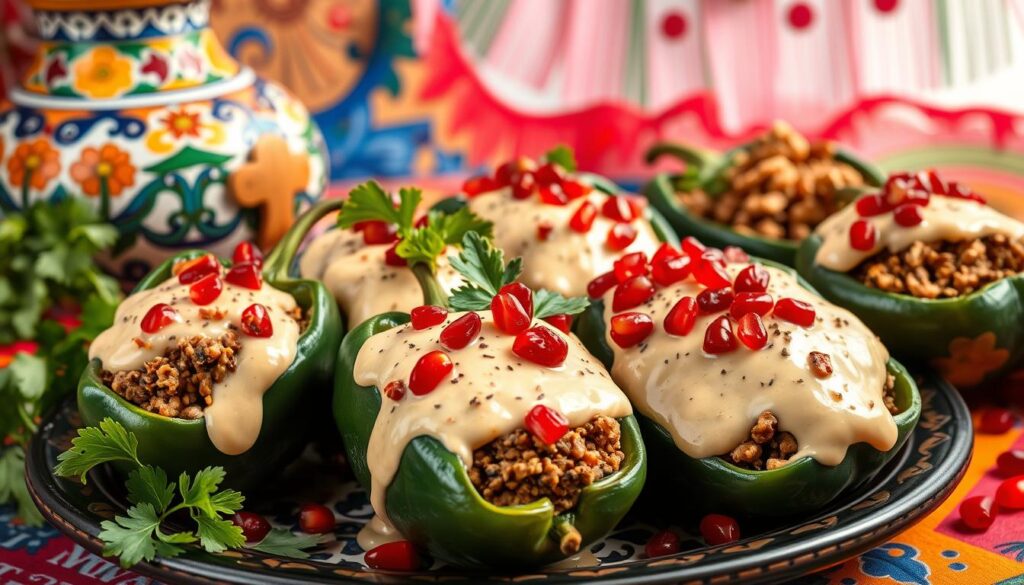
Symbolism of the Three Colors
This dish is not just about looks. It holds deep historical meaning. It’s a staple at September’s independence celebrations. Chiles en Nogada tells a story of strength, creativity, and pride through its ingredients.
“A dish is never just food—it’s a narrative of culture, history, and identity.” – Mexican Culinary Historian
The dish’s preparation shows the unity of Mexican families. It turns cooking into a special time for families to come together. This tradition connects generations through food.
Essential Ingredients for an Authentic Recipe
To make the perfect chiles en nogada, you need the right ingredients. Poblano chiles are at the center, filled with a rich mix of flavors.
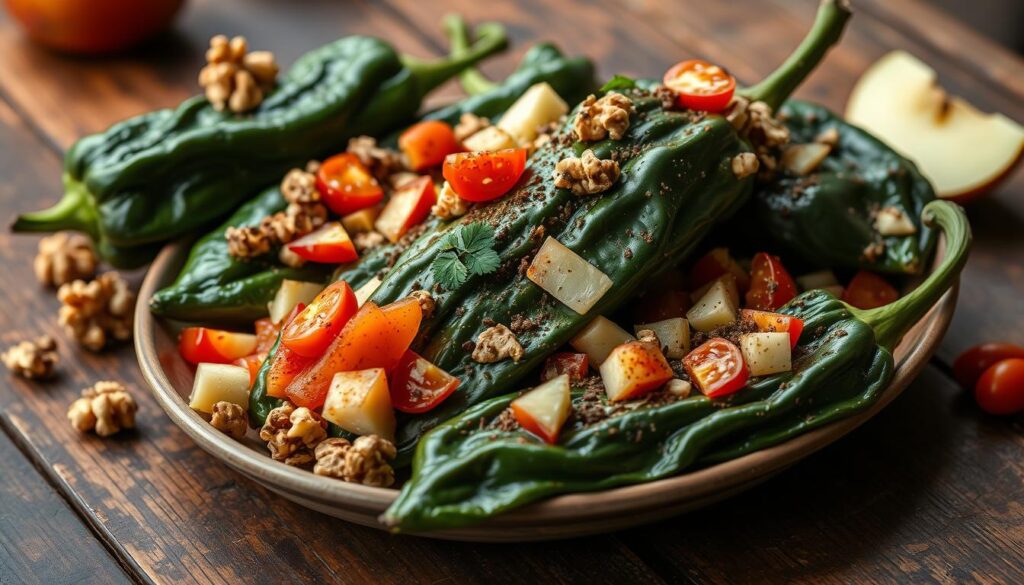
- Proteins: Ground pork and beef (about 10 oz each)
- Fruits: Apples, peaches, plantains, and candied pineapple (optional)
- Nuts: Walnuts for the sauce and almonds for the filling
- Spices: Cinnamon, cloves, and brown sugar
The filling also needs extra veggies for depth:
- 1 medium carrot
- 1 medium white onion
- 1 medium potato
- 1 zucchini squash
- 3 plum tomatoes
- ½ cup peas
- ½ cup raisins
The walnut sauce, or nogada, is made with cream, walnuts, and spices. Pomegranate seeds add the red color, making it look like the Mexican flag.
“A true chiles en nogada is more than a meal—it’s a celebration of Mexican culinary heritage.”
Some recipes add special touches like biznaga (candied cactus) or dried fruits. These add to the dish’s complexity and make it even more special.
Preparing the Poblano Chiles
Learning to roast poblano peppers is key for making real stuffed peppers. Your prep work will shape the taste and feel of Chiles en Nogada. It takes patience and care to turn these mild chiles into a dish to remember.
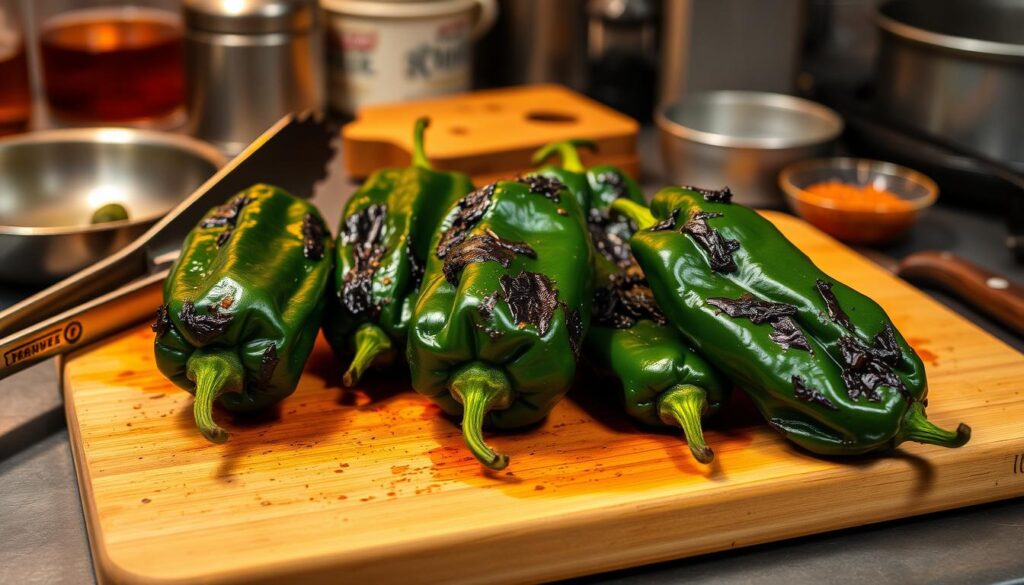
Roasting Techniques for Perfect Poblanos
To get the best roasted poblanos, follow these steps:
- Choose fresh, firm poblanos with smooth skin
- Char them using direct flame or broiler
- Turn chiles every 3-4 minutes for even cooking
- Look for skin that’s evenly blackened
Peeling and Cleaning Methods
After roasting, peeling is crucial for the perfect chile:
- Put hot chiles in a sealed plastic bag for 10-15 minutes
- Scrape off charred skin with the back of a knife
- Rinse under cool water to get rid of bits
- Pat dry with paper towels
Creating the Perfect Pocket
To make great stuffed peppers, create a pocket carefully:
- Make a single lengthwise cut
- Remove seeds and white veins gently
- Keep the chile’s structure intact
- Rinse the inside to remove any seeds
Pro tip: Handle roasted poblano peppers gently to keep their delicate structure and enhance flavor.
| Roasting Stage | Time | Key Technique |
|---|---|---|
| Direct Flame | 10-15 minutes | Rotate frequently |
| Broiler Method | 8-12 minutes | Turn every 3-4 minutes |
| Steaming | 10-15 minutes | Use sealed plastic bag |
Chiles en Nogada Recipe: Traditional Filling Preparation

Making the perfect picadillo filling is an art in Mexican cooking. Your journey to making chiles en nogada starts with mastering the flavors. This traditional recipe is truly special.
The heart of Mexican flavors is in the ingredients for your picadillo filling. Start by gathering these key items:
- ½ lb ground beef
- ½ lb ground pork
- Assorted fruits (golden raisins, dried pineapple, Bosc pear, Granny Smith apple, peach, plantain)
- Almonds
- Warm spices like cinnamon and cloves
Cooking the picadillo needs precision and patience. Start by sautéing onions and garlic until they’re translucent. Brown the meat mixture thoroughly until it’s fully cooked. Then, add the fruits and nuts for a mix of sweet and savory flavors.
| Ingredient | Quantity | Preparation Time |
|---|---|---|
| Ground Beef | ½ lb | 10 minutes |
| Ground Pork | ½ lb | 10 minutes |
| Mixed Fruits | 1 cup, diced | 5-7 minutes |
“The perfect picadillo is a delicate dance of flavors, where each ingredient tells a story of Mexican culinary heritage.” – Traditional Mexican Chef
Your cooking time should be about 15-20 minutes. Aim for a finely chopped mix that fits well in poblano peppers. A professional tip: let the filling cool a bit before stuffing for the best texture and flavor.
Making the Classic Walnut Sauce (Nogada)
Making authentic Mexican walnut cream sauce is an art. It turns your Chiles en Nogada into a culinary masterpiece. This process needs careful attention and traditional techniques from generations of Mexican cooks.
The secret to a perfect walnut cream sauce is using high-quality ingredients. It also requires precise preparation methods. Let’s look at the key steps to make this delicious Mexican sauce.
Preparing the Walnuts
Start by picking fresh, high-quality walnuts. The process involves several important steps:
- Soak 1 cup of shelled walnuts in 2 cups of milk overnight
- Blanch walnuts in hot water for 1-2 minutes
- Carefully peel off the skin to remove any bitter notes
Blending the Sauce Components
The magic of the walnut cream sauce happens when you blend it. You’ll need these key ingredients:
| Ingredient | Quantity |
|---|---|
| Blanched walnuts | 1 cup |
| Queso Fresco | 1 cup |
| Mexican sour cream | 1 15 oz container |
| Sugar | 2 tablespoons |
| Cinnamon | 1 teaspoon |
| Sea salt | 1/2 teaspoon |
Achieving the Right Consistency
The walnut cream sauce should be smooth and creamy. Blend all ingredients until it’s silky and coats the back of a spoon. If it’s too thick, add a bit of milk. The sauce’s white color is key to the Mexican flag’s look, making it essential for this dish.
The Art of Stuffing and Battering the Chiles
Creating stuffed poblano peppers is an art that needs precision and care. The capeado technique turns simple peppers into a work of art. You must prepare your poblano chiles by making a pocket for the picadillo filling without tearing.
- Select medium-sized poblano peppers (about 8 total)
- Create a careful slice to form a pocket
- Remove seeds while keeping the pepper intact
- Fill with approximately 3-4 tablespoons of picadillo
- Secure the opening with toothpicks
The egg batter is key to the capeado technique. Whip 4 egg whites to stiff peaks for a light coating. Carefully fold the egg yolks into the whites to keep the texture delicate.
Preparation involves a specific order:
- Dust peppers with flour
- Dip in the prepared egg batter
- Ensure complete and even coating
- Gently slide into hot oil
“The art of stuffing is as important as the filling itself” – Mexican Culinary Tradition
Your aim is to keep the pepper’s shape and prevent filling from spilling out. The capeado technique needs a gentle touch and practice to get the perfect golden-brown outside.
Mastering the Frying Technique
Learning to fry chiles is key for chiles en nogada. It needs precision and patience. You want a golden-brown outside and a soft inside.
Oil Temperature Control
Keeping the oil at the right temperature is crucial. Heat it to 375 degrees Fahrenheit. A deep-fry thermometer helps you get it just right.
If it’s too low, your chiles will be greasy. Too high, and they’ll burn fast.
- Heat oil slowly and steadily
- Use a heavy-bottomed skillet for even heat distribution
- Check temperature before adding chiles
Timing and Turning Methods
Frying chiles en nogada is all about timing. Fry each poblano pepper for 1-2 minutes on each side. Use two spatulas to turn them evenly.
A traditional Mexican cooking technique is to spoon hot oil over hard spots like the stem.
“The perfect fry is an art that requires attention to detail and respect for the ingredients.” – Mexican Culinary Tradition
After frying, drain the chiles on paper towels. Let them rest for 15 minutes. This helps soften the peppers and blend the flavors.
Creating the Perfect Presentation
Mastering the Mexican dish presentation of Chiles en Nogada turns your dish into a festive celebration. Your goal is to create a traditional plating that shows off Mexican culinary art.
Serving Chiles en Nogada requires a few key steps for a stunning and tasty dish:
- Choose a white ceramic plate to make the dish’s colors pop
- Place the fried, stuffed poblano chile in the plate’s center
- Drizzle the chile with creamy walnut sauce all over
- Add fresh pomegranate seeds for a bright red touch
- Top with delicate fresh parsley leaves
“A perfect Chiles en Nogada is a canvas of Mexican culinary heritage, painting the colors of the national flag on a single plate.”
The dish should show the Mexican flag’s colors: green from the poblano, white from the sauce, and red from the seeds. Serve it at room temperature for the best flavor.
| Presentation Element | Purpose |
|---|---|
| Green Poblano Chile | Represents the independence movement’s verdant spirit |
| White Walnut Sauce | Symbolizes purity and unity |
| Red Pomegranate Seeds | Signifies the blood of national heroes |
Pro tip: Take your time with the final touches. The presentation is as important as the cooking in creating a true Chiles en Nogada experience.
Seasonal Considerations and Ingredient Substitutions
Chiles en Nogada is a seasonal dish that shows off Mexican cooking. It’s made from late August to early September. This time matches the harvest of pomegranates and walnuts.
When making this famous Mexican dish, being flexible is important. You can use different ingredients while keeping the dish’s true flavor.
Working with Available Fruits
Substituting ingredients can help make Chiles en Nogada even when certain fruits are hard to find. Here are some options:
- Replace biznaga with dried pineapple or apricots
- Use local seasonal fruits with similar textures
- Experiment with regional fruit variations
Alternative Protein Options
The traditional recipe uses pork and beef. But, you can make it your own:
- Use only pork or beef if preferred
- Explore shredded chicken as an alternative
- Try vegetarian fillings for a unique twist
Remember, the beauty of Chiles en Nogada lies in its adaptability while respecting its rich cultural heritage.
Knowing when fruits are in season and being open to different ingredients lets you make a tasty version of this historic dish. It honors its origins and fits your taste and local ingredients.
Tips for Make-Ahead Preparation
Learning to prep Chiles en Nogada ahead of time makes it easier to cook. Breaking down the recipe into steps saves time and reduces stress. It turns a complex dish into a manageable task.
Focus on making key parts ahead of time for the best results. Here are top tips for prepping Chiles en Nogada:
- Prepare the picadillo filling 1-2 days before serving and refrigerate
- Roast and clean poblano chiles up to one day ahead
- Create the walnut sauce in advance and store in the refrigerator
- Stuff the chiles up to two days before final cooking
Save the steps of battering and frying for the day of serving. This keeps your Chiles en Nogada crispy and flavorful.
“Preparation is the secret ingredient in creating memorable Mexican dishes.” – Chef Maria Rodriguez
Here’s a quick guide for your prep timeline:
| Preparation Stage | Advance Preparation Time |
|---|---|
| Picadillo Filling | 1-2 days before |
| Roasted Poblano Chiles | 1 day before |
| Walnut Sauce | 2-3 days before |
| Stuffed Chiles | Up to 2 days before |
With these prep tips, Chiles en Nogada becomes a fun cooking project. Enjoy the journey of making this traditional Mexican dish.
Common Mistakes to Avoid
Mastering Chiles en Nogada needs focus and skill. Even skilled cooks face challenges making this iconic Mexican dish. Knowing common mistakes helps you make a meal that honors the tradition.
Here are key tips for avoiding mistakes in Chiles en Nogada:
- Walnut Preparation: Always remove the skin from walnuts before making the nogada sauce. Skin can make the sauce bitter, ruining the dish’s flavor.
- Chile Stuffing: Don’t overstuff the Poblano chiles. Too much filling can make them burst when frying.
- Oil Temperature: Make sure your oil is at 375°F before frying. If it’s too low, the chiles will be soggy and greasy.
Flavor matters a lot. Traditional garnishes need specific ingredients. For example, using cilantro instead of parsley changes the taste. Serving Chiles en Nogada at room temperature brings out the best flavors.
“Precision is the soul of Mexican culinary art” – Traditional Mexican Chef
When making the picadillo and nogada sauce, don’t add too much sugar. Too much sweetness can mess up the dish’s balance of flavors.
Conclusion
Making Chiles en Nogada is more than cooking a meal. It’s a journey into Mexico’s rich culture. This dish connects you to Mexico’s independence day, with every delicious bite.
The process of making Chiles en Nogada might seem hard. But the flavors tell a story of skill and tradition. From roasting chiles to making walnut sauce, each step honors its origins and Mexico’s fight for freedom.
Serving this dish is like sharing a piece of Mexican pride. The green chiles, white sauce, and red pomegranate seeds show the Mexican flag. Your kitchen becomes a celebration of national identity. Chiles en Nogada is a memorable experience that links history, tradition, and taste.
F.A.Q
What are the key ingredients for Chiles en Nogada?
The main ingredients are poblano chiles, ground pork and beef, and fruits like apple and peach. Nuts (walnuts, almonds) and spices (cinnamon, cloves) are also key. Goat cheese, sour cream, and pomegranate seeds are used too. Some recipes add biznaga (candied cactus) or dried pineapple.
When is Chiles en Nogada typically served?
It’s served in late August and early September. This is to celebrate Mexico’s Independence Day. It’s also when pomegranate seeds are fresh.
Why do Chiles en Nogada represent the Mexican flag?
The dish’s colors match the Mexican flag: green (poblano chiles), white (walnut cream sauce), and red (pomegranate seeds). This makes it a symbol of Mexican pride.
How difficult is it to prepare Chiles en Nogada?
It’s considered hard and has many steps. You need to roast and peel chiles, make the picadillo, walnut sauce, batter, fry, and assemble it carefully.
Can I make Chiles en Nogada in advance?
Yes, you can prepare parts ahead. Make the picadillo 1-2 days early, roast and clean chiles beforehand, and refrigerate the walnut sauce. Just fry and assemble on the day.
Are there vegetarian variations of Chiles en Nogada?
Yes, there are vegetarian versions. You can use plant-based proteins or extra veggies instead of meat. This keeps the traditional taste.
What is the historical significance of this dish?
Chiles en Nogada was made in 1821 by nuns in Puebla. It honored General Agustín de Iturbide, a key figure in Mexico’s War of Independence. It’s now a symbol of Mexican pride.
What are some common mistakes to avoid when making Chiles en Nogada?
Avoid mistakes like leaving walnut skin on (it’s bitter) and overstuffing chiles. Use the right oil temperature for frying. Don’t use cilantro instead of parsley and serve it warm, not cold.