Ever thought a simple potato could turn into a Moroccan street food favorite? Maakouda, the Moroccan potato pie, is set to change how you see potatoes and savory pies.
This dish is more than a meal; it’s a cultural journey. It’s loved on street corners and in family kitchens for its crispy outside and soft inside. Moroccan Jews especially enjoy it during special times, showing the rich North African food traditions.
Ready to dive into a world of flavors? Get ready to explore the lively streets of Morocco from your kitchen.
Key Takeaways
- Maakouda is a traditional Moroccan potato dish served as a pie or fritters
- Represents the rich culinary heritage of Moroccan street food
- Takes less than an hour to prepare
- Popular vegetarian option in Moroccan cuisine
- Can be enjoyed as a snack, appetizer, or main course
Introduction to Traditional Moroccan Street Food Culture
Moroccan street food is a vibrant world that shows off the country’s rich culture. The markets and street corners of Morocco are filled with traditional recipes passed down through generations.
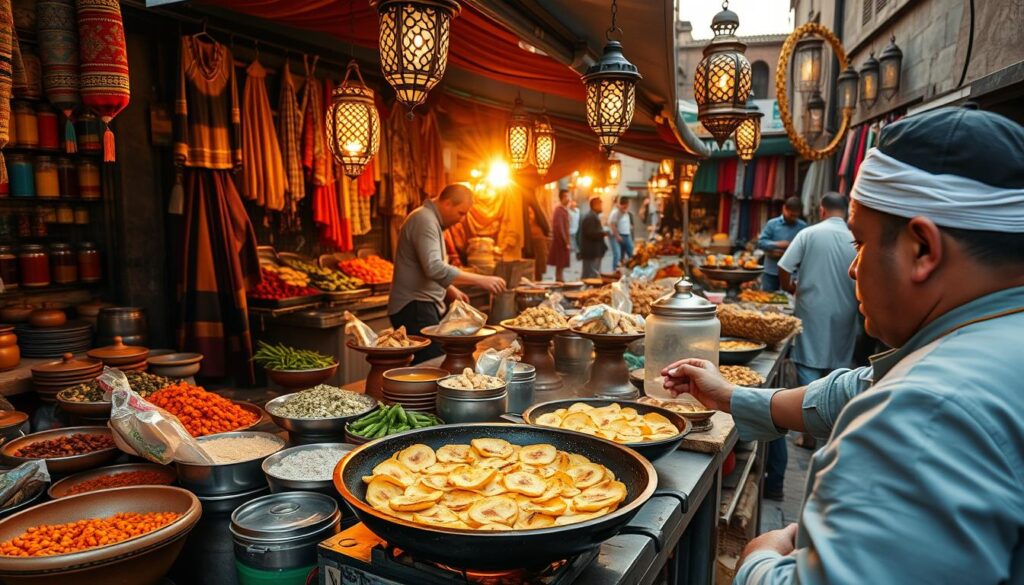
Every bite of Moroccan street food is a taste of North African flavors. The country’s food is a mix of Berber, Arab, Mediterranean, and African cooking styles.
Origins of Maakouda in North African Cuisine
Maakouda is a key street food that shows Moroccan culinary creativity. Potatoes were brought to the area long before the French protectorate. They became a key ingredient in many dishes.
- Potato introduction predates 1910
- Influenced by multiple cultural interactions
- Reflects adaptability of Moroccan cuisine
Cultural Significance in Moroccan Daily Life
Street food in Morocco is more than food—it’s a way to connect. Maakouda, made by vendors, brings people together in cities.
| Street Food Characteristic | Percentage/Detail |
|---|---|
| Urban Street Food Vendors | 65% located in major cities |
| Maakouda Price Range | $0.50 – $1.00 |
| Vegetarian Options | 70% of vendors offer vegetarian choices |
Regional Variations Across Morocco
Every region in Morocco puts its own twist on Maakouda. From Marrakech’s spicy versions to coastal flavors, these differences show the creativity of Moroccan street food.
“In Morocco, every street corner tells a flavor story” – Moroccan Culinary Saying
Maakouda is loved as a snack or part of a meal. It captures the heart of Moroccan food culture.
Essential Ingredients for Authentic Maakouda
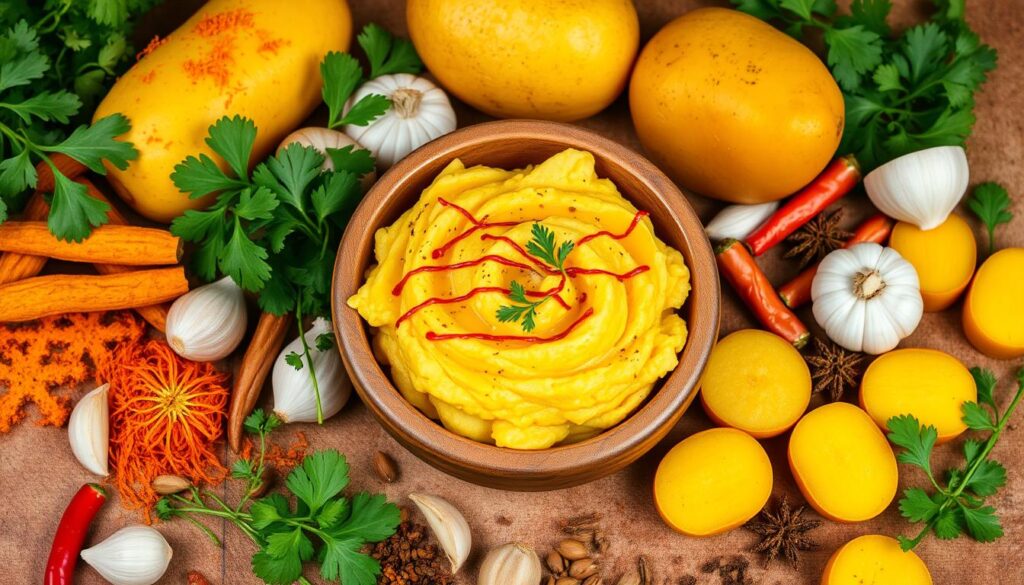
To make authentic maakouda, you need the right ingredients. This dish is a key part of middle eastern recipes. It’s a vegetarian favorite that needs the right mix to taste like Morocco.
Here’s what you’ll need to turn potatoes into a dish to remember:
- 2 pounds of golden potatoes
- 1 medium yellow onion, finely chopped
- 3 garlic cloves, pressed
- Olive oil for frying
The spice blend is what makes maakouda special. You’ll need these spices:
- 1.5 tablespoons ground cumin
- 1 teaspoon turmeric
- 0.5 teaspoon freshly ground black pepper
- 0.25 cup fresh cilantro, coarsely chopped
“Spices are the heart of Moroccan cuisine, transforming simple ingredients into extraordinary dishes.”
You’ll also need 2 large eggs to bind the potato mix. Make sure you have good cooking tools to get that crispy outside.
Tip: Use fresh ingredients for the best taste. Choose firm potatoes and fresh spices for that authentic flavor.
Maakouda – Moroccan Potato Pie Recipe
Making perfect potato fritters needs skill and care. Maakouda, a favorite deep-fried snack, brings Moroccan flavors to your home. These savory pastries are more than a side dish. They’re a journey into North African cooking traditions.
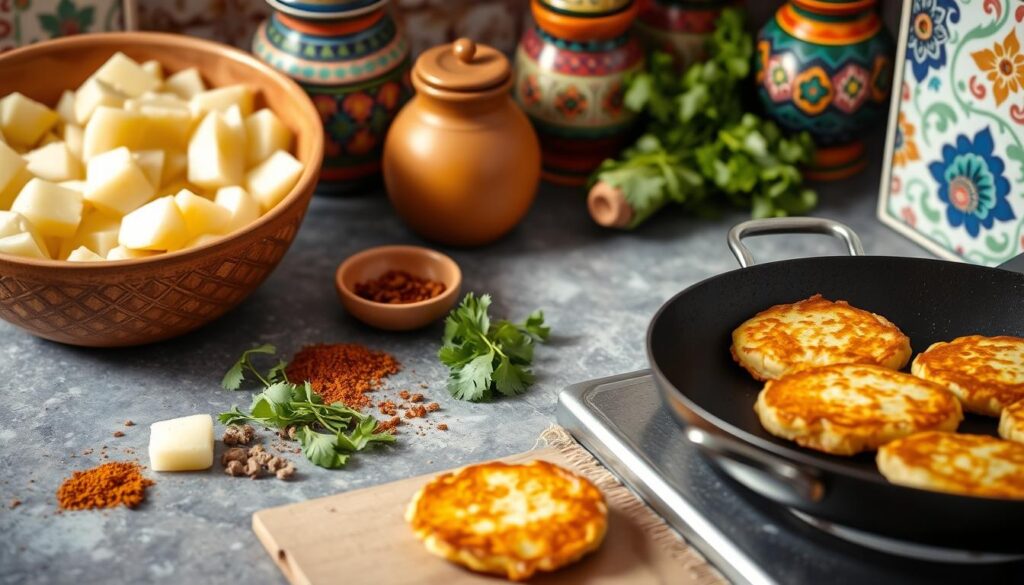
Before starting, make sure you have all your ingredients ready. You’ll need:
- 2 lb golden potatoes (skin on)
- 5 tablespoons olive oil
- 5 large eggs
- 3 large carrots, peeled and diced
- ½ lb green peas
- 2 teaspoons kosher salt
- ½ teaspoon turmeric
- ¼ teaspoon ground black pepper
Traditional Preparation Techniques
The secret of Maakouda is in how it’s made. Start by boiling your potatoes until they’re tender but still firm. This is key for a great deep-fried snack.
Step-by-Step Cooking Guide
- Preheat your oven to 425°F
- Boil potatoes for about 25 minutes
- Separate egg whites and yolks
- Mash potatoes well
- Mix in diced veggies and spices
- Fold in egg mixture gently
Expert Texture Tips
Pro tip: For a crispy outside, bake at 425°F for 10 minutes. Then, lower to 350°F for 30-35 minutes. This way, your fritters get a golden crust and stay tender inside.
A true Maakouda should crunch on the outside and melt in your mouth – a delicate balance of texture and flavor!
These savory pastries can be kept in the fridge for up to 5 days. They’re a tasty and easy meal prep option.
The Art of Spicing Your Maakouda
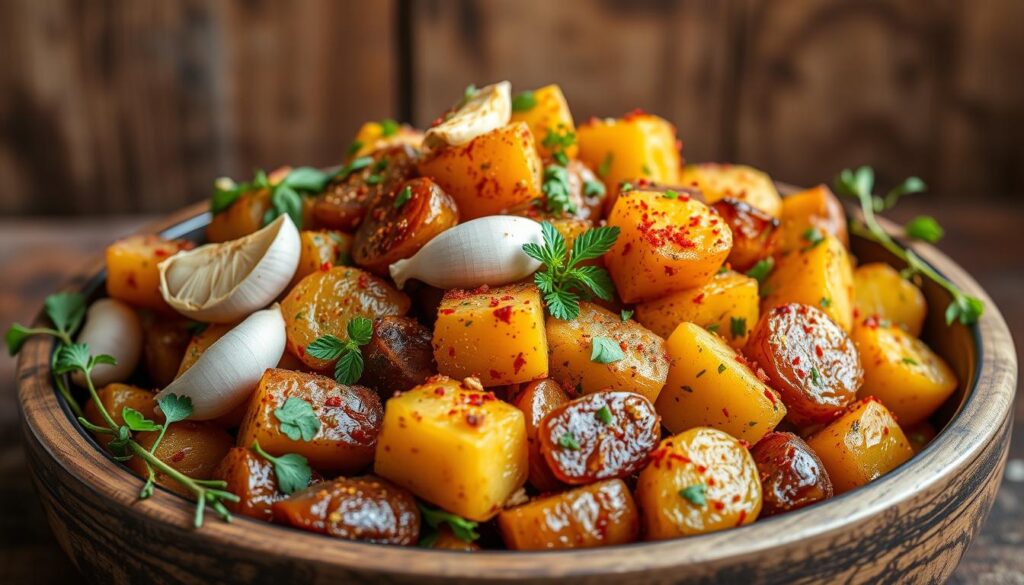
Spicing is key in Moroccan cooking, especially with maakouda. These spiced potatoes turn into a Middle Eastern recipe wonder with the right flavors.
Moroccan spice blending is a long-standing tradition. It shows the rich culture of North Africa. Your maakouda will burst with flavor from a mix of spices.
- Paprika – for warm, sweet undertones
- Cumin – adding earthy depth
- Turmeric – bringing golden color and subtle bitterness
- Cayenne pepper – for a gentle heat
“Spices are the soul of Moroccan cuisine, transforming ordinary ingredients into extraordinary dishes.” – Moroccan Culinary Tradition
When making your spiced potatoes, balance is everything. Start with small amounts and adjust to taste. Aim for a flavor mix that honors Middle Eastern recipes.
| Spice | Flavor Profile | Recommended Quantity |
|---|---|---|
| Paprika | Sweet, Mild | 1-2 teaspoons |
| Cumin | Earthy, Warm | 1 teaspoon |
| Turmeric | Bitter, Bright | 1/2 teaspoon |
| Cayenne | Hot, Intense | Pinch to taste |
Try different spice combinations to make your maakouda special. Bring Moroccan flavors to your kitchen.
Serving Suggestions and Accompaniments
Maakouda is a vibrant treat from Moroccan cuisine. These potato appetizers are perfect as vegetarian snacks. They come alive with the right sides. Your journey starts with how you serve them.
Traditional Dipping Sauces
Try these classic Moroccan sauces with your savory pastries:
- Harissa: A spicy chili paste that adds intense heat
- Zaalouk: Smoky eggplant and tomato sauce
- Chermoula: Herbal cilantro and parsley blend
Popular Side Dishes
Pair your maakouda with these quick sides:
| Side Dish | Preparation Time | Flavor Profile |
|---|---|---|
| Moroccan Carrot Salad | 25 minutes | Sweet and tangy |
| Chickpea Salad | 20 minutes | Protein-rich |
| Khobz Bread | 15 minutes | Robust and hearty |
Presentation Tips
Make your potato appetizers look amazing with these tips:
- Arrange maakouda on a colorful ceramic plate
- Garnish with fresh herbs like mint or parsley
- Serve warm with multiple dipping sauces
“Great food is an art, and presentation is its canvas.” – Moroccan Culinary Proverb
The beauty of maakouda is in its taste and how you serve it. Share it with your loved ones and enjoy.
Ramadan and Maakouda Traditions
During Ramadan, maakouda becomes more than just a street food. It’s a beloved dish that brings families together. The potato pie is a highlight of iftar meals, offering comfort and nourishment after fasting.
Moroccan families put extra effort into making this dish during Ramadan. They create lasting memories around the dinner table. Sharing maakouda during Ramadan shows its deep cultural value.
“In every crispy bite of maakouda, we taste the warmth of family and the spirit of Ramadan”
- Traditional ramadan specialties often include maakouda as a key appetizer
- Families typically prepare large batches to share with neighbors and extended family
- The dish serves as a quick energy boost after sunset
When making maakouda in Ramadan, cooks often try new spices and fillings. Some add special meat or vegetable stuffings to make it more filling for breaking the fast.
Maakouda is often served with soups like Chorba and Harira. It adds a crispy texture and hearty flavor to the iftar meal. The tradition of making and sharing this dish strengthens community bonds during Ramadan.
Health Benefits and Nutritional Information
Maakouda is a tasty vegetarian dish that’s also good for you. It’s a traditional potato recipe that’s both delicious and healthy.
Maakouda is a great choice for vegetarian snacks. It has a balanced mix of nutrients that keeps you full. Let’s look at why it’s a smart pick for your diet.
Dietary Considerations
A single serving of maakouda is packed with nutrients:
- High in potassium: 713mg per serving (20% daily value)
- Moderate protein content: 5.7g per serving
- Low sugar: Only 1g per serving
- Contains essential vitamins and minerals
Modern Healthy Adaptations
Food lovers who care about health can tweak this recipe. Here are some ideas:
- Bake instead of deep-fry to reduce oil content
- Use sweet potatoes for added nutrients
- Incorporate additional fresh herbs like cilantro and parsley
| Nutrient | Amount per Serving | % Daily Value |
|---|---|---|
| Total Fat | 12.5g | 19.2% |
| Carbohydrates | 32.3g | 10.8% |
| Protein | 5.7g | 11.4% |
| Vitamin C | 8.8mg | 11% |
| Iron | 1.7mg | 9% |
Pro tip: For the best taste and nutrition, use fresh Russet or Yukon Gold potatoes. Try to use less oil.
“Eating well is a form of self-respect” – Unknown
Troubleshooting Common Maakouda Challenges
Making perfect potato fritters needs skill and knowledge. When you’re deep-frying this appetizer, you might face some common problems. These can affect the texture and taste of your savory pies.
Key Preparation Problems and Solutions
- Potato Mixture Consistency: Keep potato fritters from crumbling by managing moisture well
- Stay away from too wet ingredients that make patties fall apart
- Use breadcrumbs or flour to soak up extra liquid
- Let the mixture rest for 30 minutes before frying to help it stick together better
It’s important to control the temperature when deep-frying maakouda. Keep the oil at 350°F (175°C). This will give you a golden-brown outside and a soft inside.
Troubleshooting Texture Issues
| Problem | Cause | Solution |
|---|---|---|
| Soggy Fritters | Low oil temperature | Use thermometer, heat oil to 350°F |
| Dry Patties | Not enough moisture | Add a little milk or olive oil |
| Uneven Cooking | Patties are not the same size | Make them all the same size, fry in small batches |
“Perfect maakouda is an art of balance between moisture, seasoning, and cooking technique.” – Moroccan Culinary Experts
Remember, making these tasty potato fritters takes practice. Each batch will help you get better at it. You’ll learn the fine art of making real Moroccan savory pies.
Conclusion
Your journey through Moroccan maakouda recipes is just starting. You’ve opened a door to North African flavors passed down for generations. Making maakouda is more than cooking; it’s about connecting with a rich culinary heritage.
Maakouda is perfect for both experienced cooks and beginners. Its simple ingredients and easy preparation make it a great dish to try. You might also enjoy making dishes like the Passover potato pie to add to your collection.
Cooking is a journey of discovery. Every time you make maakouda, you’re keeping a piece of cultural history alive. Your kitchen becomes a bridge, bringing Morocco’s warmth and spirit to your table.
We encourage you to keep exploring and enjoying Moroccan cuisine. Your culinary adventure is just starting.
F.A.Q
What is maakouda?
Maakouda is a traditional Moroccan dish. It’s a potato pie or fritter. It’s made with mashed potatoes, spices, and fried until crispy.
Is maakouda vegetarian?
Yes, maakouda is vegetarian. It’s made with potatoes, spices, and herbs. It’s great for both vegetarians and meat lovers.
What spices are typically used in maakouda?
Maakouda uses cumin, paprika, coriander, garlic, and parsley. These spices give it a unique Moroccan taste.
How is maakouda typically served?
Maakouda is a street food or appetizer. It’s served with harissa or yogurt sauce. It’s perfect as a snack or part of a meal during Ramadan.
Can I make a healthier version of maakouda?
Yes, you can make a healthier maakouda. Try baking instead of frying, use sweet potatoes, or use less oil. These changes keep the flavor but are better for you.
Is maakouda difficult to make at home?
Making maakouda at home is easy once you get the hang of it. The trick is to mash the potatoes right, season well, and fry correctly for a crispy outside.
What is the significance of maakouda during Ramadan?
Maakouda is a favorite during Ramadan. It’s enjoyed as a way to break the fast (iftar). Its comforting taste is loved during this special month in Morocco.
Can I substitute ingredients if I can’t find traditional Moroccan spices?
You can use similar spices or Moroccan spice blends. These can be found in stores or online. They help you get close to the authentic flavor.