Have you ever thought about how a plant-based noodle dish could change your meals? Vegan ramen is making waves in the U.S., offering a tasty journey into umami flavors. It’s a game-changer for dinner.
The rise of plant-based recipes has put vegan ramen recipe in the spotlight. Home cooks are finding the rich, complex tastes of a plant-based noodle alternative. Mushrooms are key in making a savory broth that beats traditional meat-based ones.
This dish combines fresh shiitake and cremini mushrooms for a rich plant-based broth. It’s a hit with even the pickiest eaters. The recipe is quick, serving four people in about 30 minutes. It’s a hearty meal that’s easy to make.
Key Takeaways
- Vegan ramen offers a complete plant-based meal experience
- Mushroom-based broths provide deep, complex umami flavors
- Customizable toppings allow for personalized nutrition
- Gluten-free noodle options are readily available
- Quick preparation makes it perfect for busy home cooks
Understanding the History and Evolution of Ramen
Ramen has grown from a simple street food to a global favorite. Let’s dive into its rich history and amazing changes over time.
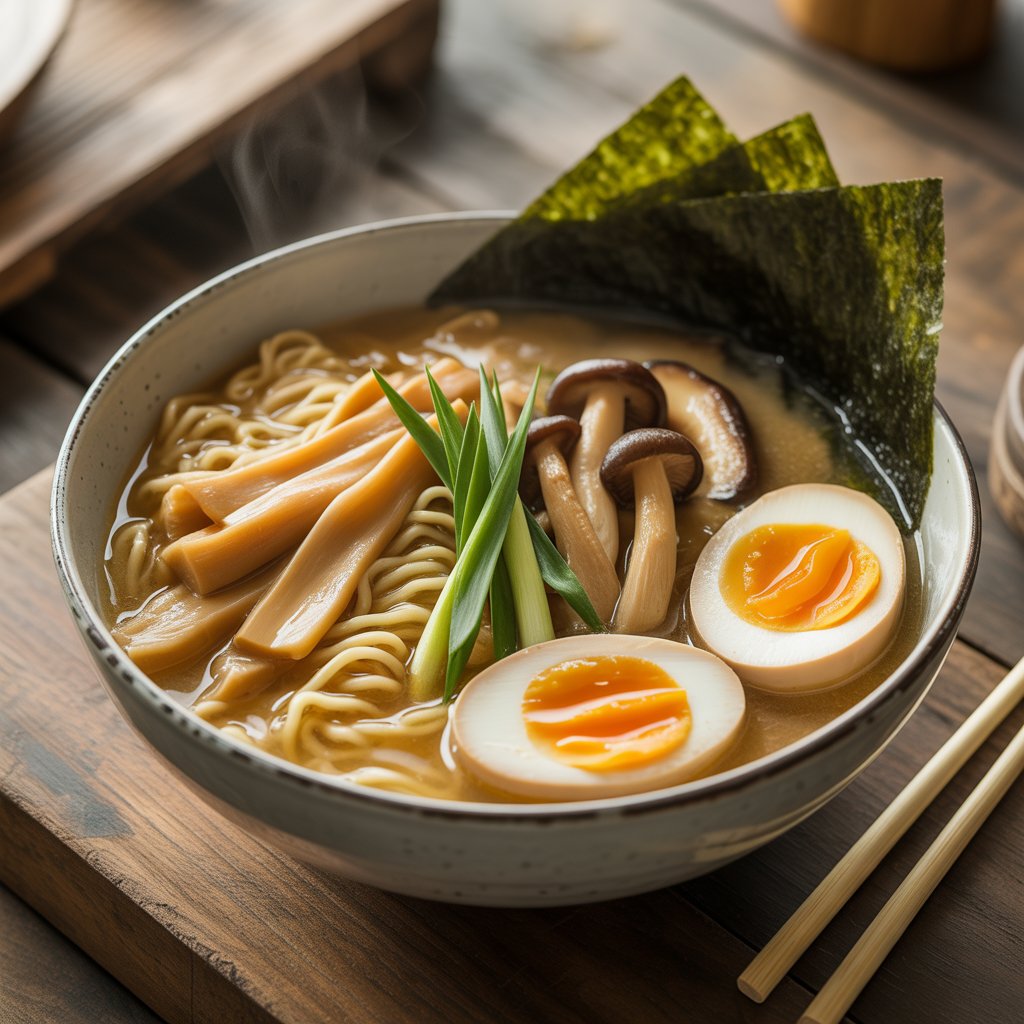
The story of ramen starts in early 20th-century Japan. In 1910, Rairaiken, the first ramen shop, opened in Asakusa, Tokyo. This was a big moment in ramen’s history.
The Great Kanto Earthquake of 1923 helped spread ramen. Food stalls popped up, showing the strength of Japanese street food.
Origins of Traditional Japanese Ramen
At first, ramen was a hearty street food with many regional flavors. Each area had its own style:
- Tokyo: Shoyu (soy sauce) ramen
- Fukuoka: Rich tonkotsu ramen
- Sapporo: Miso-based ramen
- Coastal regions: Delicate shio (salt) ramen
The Rise of Plant-Based Ramen
As people’s eating habits changed, chefs started making ramen with plant-based noodles and meat-free broth. This let vegetarians and vegans enjoy ramen’s rich flavors.
“Ramen is more than a meal – it’s a culinary canvas that adapts to changing tastes and dietary needs.” – Ramen Expert
Modern Adaptations and Innovations
Today, ramen has gone beyond its traditional roots. Chefs are now trying new things:
- Mushroom-based umami broths
- Alternative protein sources
- Global flavor infusions
- Dietary-specific recipes
From the instant ramen boom in 1958 to today’s gourmet plant-based versions, ramen keeps winning hearts around the world. Its ability to change and its deep cultural roots make it a true favorite.
Essential Components of a Vegan Ramen Recipe
Making the perfect vegan ramen starts with picking the right ingredients. You’ll want to choose high-quality vegan ramen ingredients for a tasty and healthy meal. The best plant-based ramen comes from carefully selected parts that offer great flavor and texture.
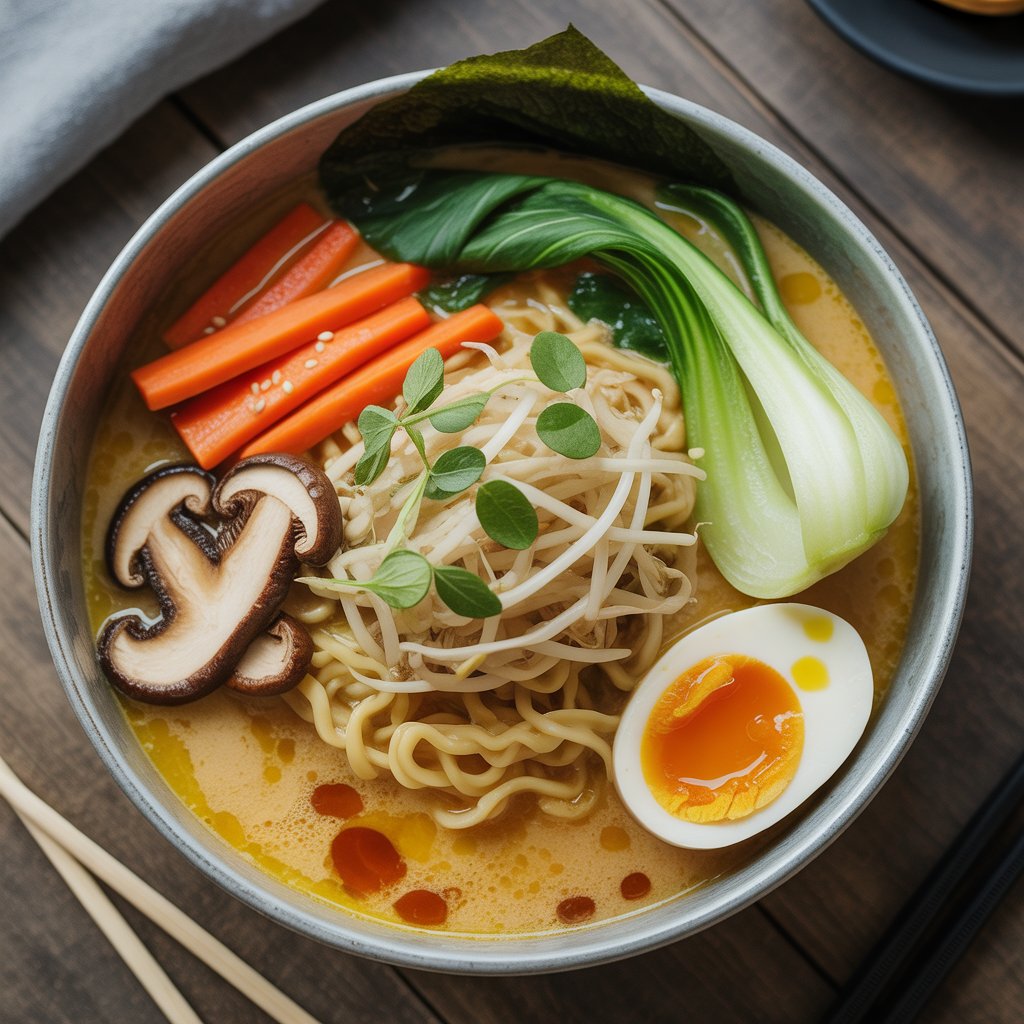
- Broth Base: A rich, flavorful liquid using vegetable stock or mushroom-infused broth
- Noodles: Egg-free options that ensure a gluten-free ramen experience
- Plant-based protein: Tofu, tempeh, or seitan for substantial nutrition
- Fresh vegetables: Adds color, texture, and additional nutrients
When picking your plant-based protein, think about extra-firm tofu or smoked tofu. These can be marinated and cooked to boost the taste. For gluten-free ramen, choose certified gluten-free noodles and tamari instead of soy sauce.
“The secret to amazing vegan ramen is balancing flavors and textures with intentional ingredient selection.”
Your ingredient list might include:
- Shiitake mushrooms
- Baby bok choy
- Carrots or daikon radish
- Scallions
- Chili crisp for added excitement
By carefully choosing your vegan ramen ingredients, you’ll make a dish that’s both healthy and delicious.
Creating the Perfect Plant-Based Broth
Making a great vegetable broth is key to vegan ramen. It starts with picking the right ingredients and how you prepare them. This builds deep umami flavors.
Mushroom-Based Umami Foundation
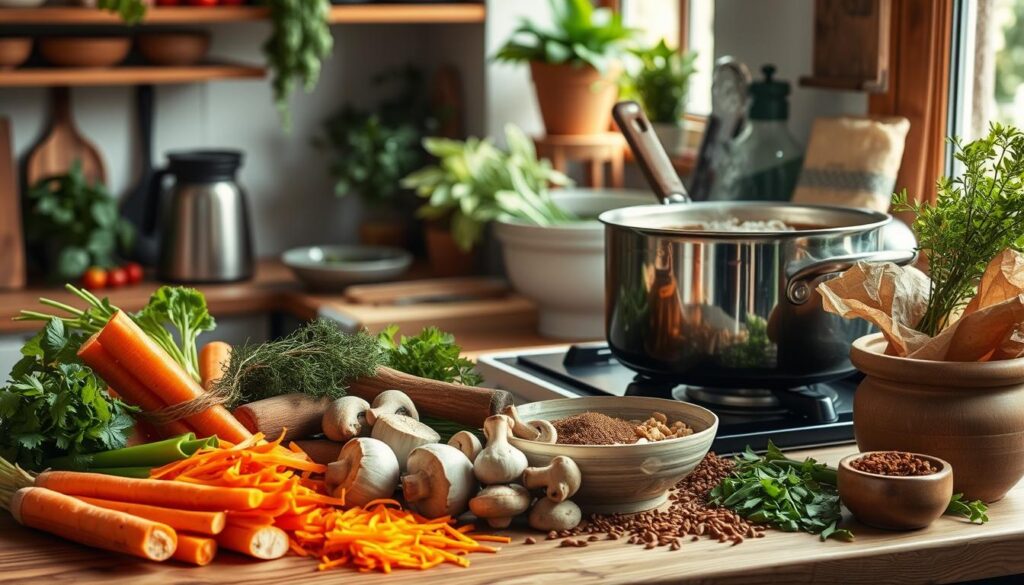
Mushrooms are the secret to a rich broth. Shiitake and cremini mushrooms add a savory taste like meat broths. To get these flavors, roast and char mushrooms, then simmer with aromatics.
- Roasting fresh and dried mushrooms
- Charring vegetables for deeper complexity
- Slow simmering with aromatic ingredients
Key Aromatics and Seasonings
Season your broth wisely. Use kombu, garlic, ginger, and scallions for layers of flavor. Tamari, mirin, and rice vinegar will make it a masterpiece.
Miso and Soy Enhancement Techniques
Miso paste boosts flavor. Add it at the end to keep its nutrients. Mixing white and red miso adds depth to your broth.
“A great vegan ramen broth is about patience and layering flavors” – Ramen Chef
Your broth takes 20-30 minutes to make. It’s best refrigerated for up to 4 days. Each serving has 16g of carbs and 5g of protein.
Choosing the Right Noodles for Your Ramen
Choosing the right noodles is key for vegan ramen. The right noodles can turn a simple meal into a masterpiece. There are many vegan ramen noodles, each with its own texture and flavor.
- Egg-free options for authentic vegan preparation
- Gluten-free alternatives for dietary restrictions
- Fresh versus dried noodle varieties
- Wheat-based and rice-based noodle options
Finding gluten-free noodles can be tough but worth it. Look for certified gluten-free ramen noodles in Asian markets or big grocery stores. Hakubaku offers organic noodles that taste great and feel right.
| Noodle Type | Texture | Dietary Considerations |
|---|---|---|
| Wheat Ramen | Chewy, traditional | Contains gluten |
| Rice Noodles | Smooth, delicate | Gluten-free |
| Soba Noodles | Nutty, hearty | Partially gluten-free |
Pro tip: Rinse your noodles in cold water after cooking. This removes excess starch and prevents clumping. Cook them separately from the broth for the best texture.
“The right noodle can elevate your vegan ramen from good to extraordinary.” – Culinary Experts
Plant-Based Protein Options and Preparations
Vegan ramen opens up a world of protein choices. It turns your noodle bowl into a healthy, tasty meal. By exploring vegan proteins, you can make a meal that’s both delicious and fits your diet.
Tofu Preparation Methods
Tofu is a key protein in vegan ramen. It’s great because it soaks up flavors well. Here’s how to prepare tofu for your ramen:
- Press extra-firm tofu to remove excess moisture
- Cut into cubes or slices for optimal texture
- Marinate in soy-based ingredients for enhanced flavor
- Bake or pan-fry until golden and crispy
Alternative Protein Sources
There are many vegan proteins to try in your ramen:
- Edamame: Protein-rich and vibrant green
- Seitan: High-protein wheat-based option
- Tempeh: Fermented soybean protein
- Lentil tofu: Unique plant-based alternative
Marination Techniques
“The secret to delicious vegan protein is in the marinade.” – Vegan Cooking Experts
Marinating your protein can make your ramen taste better. Here are some soy-based ingredients to try:
- Soy sauce or tamari
- Maple syrup for sweetness
- Sesame oil for depth
- Minced garlic and ginger
Try these protein options and marinades to make a memorable vegan ramen. It will please your taste buds and meet your nutritional needs.
Fresh and Seasonal Vegetable Toppings
Start your veggie-packed ramen with the right seasonal vegetables. Your bowl becomes a canvas for colorful, fresh ingredients. Explore innovative ramen recipes that highlight plant-based toppings.
Here are some seasonal vegetable options for nutritious toppings:
- Baby bok choy, lightly sautéed and sliced
- Julienned carrots for crunch and color
- Tender snow pea pods
- Sweet corn kernels
- Earthy shiitake mushroom caps
Each vegetable adds a unique touch to your ramen. Shiitake mushrooms have a meaty texture, while green onions add a fresh kick. Spinach and bamboo shoots change with the seasons, keeping your ramen exciting.
| Vegetable | Flavor Profile | Nutritional Benefit |
|---|---|---|
| Baby Bok Choy | Mild, slightly sweet | High in vitamins A and C |
| Shiitake Mushrooms | Earthy, umami | Rich in selenium and B vitamins |
| Carrots | Sweet, crunchy | Excellent source of beta-carotene |
Your seasonal vegetables turn a simple ramen into a nutritious masterpiece. Try local, fresh produce to keep your ramen exciting and delicious.
Umami-Rich Garnishes and Condiments
To make your vegan ramen amazing, use flavorful condiments wisely. The right garnishes turn a simple dish into a masterpiece. You can make it your own with traditional Japanese seasonings.
Traditional Japanese Seasonings
Authentic Japanese ramen shines with the right toppings. Here are some classic garnishes:
- Toasted sesame seeds for nutty crunch
- Nori sheets cut into delicate strips
- Gomasio (sesame salt mixture)
- Finely chopped scallions
Homemade Chili Oil Options
Make your own chili oil for extra depth and heat. Here’s a simple recipe:
- Dried chili peppers
- Vegetable oil
- Garlic
- Sesame seeds
Creative Garnishing Ideas
Try unique toppings to make your vegan ramen stand out. Add:
- Crispy fried garlic chips
- Pickled vegetable garnishes
- Chili crisp for extra spice
- Roasted seaweed flakes
“The art of ramen is in the details – every garnish tells a story.” – Ramen Chef
These flavorful condiments are your key to a unique ramen experience. Keep trying until you find your favorite mix!
Step-by-Step Assembly Guide
Learning to make vegan ramen takes skill and attention to detail. Your dish needs careful preparation to get the best taste and texture. It’s all about keeping each ingredient just right.
Begin by getting your ingredients ready. Cook the ramen noodles as the package says, usually 2-3 minutes in boiling water. Then, drain and rinse with cold water to stop cooking and prevent sticking.
- Prepare crispy tofu by pressing and cutting 14 ounces of extra-firm tofu
- Cook your chosen vegetables like bok choy, mushrooms, or broccoli
- Warm 6 cups of vegetable broth with 2 tablespoons of miso paste
- Gather garnishes such as green onions and seaweed
How you put your ramen together is key. Layer your ingredients carefully to enhance flavor and look. Start with noodles in a bowl, then add hot broth, and finally, arrange your protein and veggies.
“The magic of ramen is in its harmonious combination of textures and flavors” – Melissa Huggins
Finish with garnishes like green onions, a drizzle of sesame oil, and chili garlic sauce if you like. Your vegan ramen is now ready to eat. Enjoy it right away for the best flavor and texture!
Storage and Reheating Tips
Keeping your vegan ramen fresh is key. You need to store and reheat it right to enjoy it later. The right storage keeps your ramen tasty and fresh.
“The secret to great leftover ramen is treating each component with care.” – Vegan Culinary Expert
Here’s how to store your vegan ramen:
- Separate broth, noodles, and toppings before refrigeration
- Store broth in an airtight container for up to 5 days
- Rinse cooked noodles with cold water to prevent sticking
- Keep toppings in sealed containers to maintain freshness
Reheating vegan ramen needs a gentle touch. Warm the broth first. Then add noodles and toppings just before serving. Don’t boil the broth to keep its nutrients and flavor.
Pro tip: Broth gets even tastier in the fridge overnight. Your leftover ramen might taste better than the first time!
Storage Duration and Safety
For safe storage, follow these tips:
- Refrigerate cooked ramen within 2 hours of making it
- Eat refrigerated ramen in 3-4 days
- Freeze broth for up to 2 months if you need to
- Throw away leftovers that have been at room temperature for over two hours
Tip: Cool the broth completely before refrigerating to keep it safe and stop bacteria from growing.
Health Benefits and Nutritional Information
Vegan ramen is a nutritional powerhouse. It’s a nutritious vegan meal full of essential nutrients. Unlike cheap packaged ramen, homemade vegan ramen is balanced and healthy.
Health benefits of ramen go beyond what you expect. Using whole wheat or brown rice noodles increases fiber and slows down digestion. Tofu adds plant-based protein, iron, and calcium, boosting your health.
- Provides essential micronutrients from non-starchy vegetables
- Low in saturated fat and cholesterol-free
- Rich in antioxidants from mushroom-based broths
- Supports gut health through fermented ingredients like miso
“Vegan ramen transforms a simple dish into a nutritional powerhouse.” – Plant-Based Nutrition Expert
Now, let’s look at the nutritional breakdown of a typical serving:
| Nutrient | Amount per Serving |
|---|---|
| Calories | 418 |
| Carbohydrates | 40g |
| Protein | 14g |
| Fat | 23g |
Choosing vegan ramen means more than just a tasty meal. It’s an investment in your health. The mix of veggies, plant-based proteins, and complex carbs makes for a balanced and nourishing meal.
Conclusion
Your journey into vegan ramen opens a world of endless creativity and flavor. It’s more than a meal; it’s a celebration of plant-based cuisine. It turns simple ingredients into a spectacular dining experience.
Each bowl is a masterpiece of cruelty-free cuisine. It doesn’t sacrifice taste or nutritional value. From rich umami broths to carefully chosen toppings, your dish can be a true work of art.
The versatility of vegan ramen lets you try new ingredients. You can use shiitake mushrooms, sweet potatoes, and unique spice blends. This way, you can create a meal that fits your taste and dietary needs perfectly.
Whether you’re a vegan or just trying plant-based options, this dish is delicious and satisfying. It shows that compassionate cooking can be tasty and fulfilling. Your vegan ramen journey shows that with creativity and passion, you can make a traditional dish modern and nutritious.
Every bowl of vegan ramen is a chance to try new flavors and support sustainable eating. It’s a celebration of plant-based cooking’s incredible potential. Your culinary adventure is just starting, and the possibilities are endless.
F.A.Q
What makes ramen vegan?
Vegan ramen uses plant-based broths instead of meat. It has egg-free noodles and tofu or edamame for protein. It gets umami from miso, mushrooms, and veggies, not animal products.
How can I make my vegan ramen gluten-free?
Use gluten-free tamari and gluten-free noodles to make ramen gluten-free. Choose ingredients carefully. Look for rice noodles or gluten-free ramen from brands like Hakubaku.
What are the best protein sources for vegan ramen?
Good proteins for vegan ramen are tofu, edamame, tempeh, and protein cubes. Marinate tofu for extra flavor. This makes your ramen bowl more satisfying.
How long can I store vegan ramen?
Store broth in a sealed container in the fridge for up to 5 days. Keep noodles and toppings separate. Warm broth gently and add fresh ingredients just before serving.
What are some essential vegan ramen toppings?
Essential toppings are baby bok choy, shiitake mushrooms, and carrots. Add green onions, nori sheets, sesame seeds, and chili crisp. You can also use bean sprouts, corn, or seasonal veggies.
Can I make vegan ramen spicy?
Yes! Use homemade chili oil, sriracha, chili crisp, or fresh chili peppers. Make your own chili oil with chili peppers, garlic, maple syrup, and spices for the perfect spice level.
Is vegan ramen nutritionally balanced?
Yes, vegan ramen is nutritious. It has plant-based proteins, carbs from noodles, and vitamins and minerals from veggies. Mushroom broth adds antioxidants, and miso provides probiotics.
What type of mushrooms work best for ramen broth?
Shiitake mushrooms, fresh and dried, are great for broth. Cremini mushrooms add earthy flavors. Using both fresh and dried mushrooms creates a rich, umami broth.