
Growing up in a Mexican-American home, I never thought a prickly cactus could make such a tasty salad. My grandmother’s first time making ensalada de nopales amazed me. She showed me how to handle these unique green paddles.
This Mexican cactus salad is more than a recipe. It’s a journey into traditional Mexican cuisine. The salad mixes fresh ingredients in a vibrant, healthy dish. It takes your taste buds to Mexico.
If you love trying new foods or want a healthy meal, this dish is for you. It’s a special part of Mexican cuisine. Get ready to love nopales, a new favorite in your kitchen.
Key Takeaways
- Ensalada de nopales is a traditional Mexican cactus salad packed with nutrients
- The recipe requires minimal preparation time of just 25 minutes
- Nopales are vegan-friendly and rich in vitamins and minerals
- The salad can be stored in the refrigerator for up to 3 days
- Each serving contains only 24 calories
Understanding Nopales: The Mexican Prickly Pear Cactus
Explore the world of nopales, a key part of Mexican food for centuries. These cactus pads mix flavor, nutrition, and culture in a unique way. They will change how you see food.

What are Nopales?
Nopales are the flat, green parts of the prickly pear cactus, known as opuntia. They are a mainstay in Mexican cooking, with a special taste and texture. You can find them fresh in markets and street stalls in Mexico.
- Typical size: 4-6 inches long
- Appearance: Flat, green, paddle-shaped
- Flavor profile: Slightly sour with a firm texture
Cultural Significance in Mexican Cuisine
Nopales have a long history in Mexican food, dating back to the Aztecs. They are more than food; they symbolize Mexico’s rich farming traditions.
Nopales are more than just a vegetable – they are a living connection to Mexico’s ancient culinary traditions.
Health Benefits and Nutritional Value
Nopales are a healthy choice for salads, packed with nutrients. They are low in calories but high in vitamins and minerals.
| Nutritional Content (per 100g) | Amount |
|---|---|
| Calories | 16 |
| Protein | 1.3g |
| Fiber | 2.2g |
| Vitamin C | 12% DV |
| Calcium | 16% DV |
Eating nopales may help control blood sugar, lower cholesterol, and fight inflammation. This cactus is a true superfood that boosts your Mexican dishes and health.
Essential Ingredients for Traditional Ensalada de Nopales Recipe
Making an authentic Mexican dish like Ensalada de Nopales needs the right fresh ingredients. The secret to this recipe is the mix of cactus paddles and other flavors. Together, they highlight the unique taste of nopalitos.
Fresh vs. Jarred Nopales Options
When making your salad, pick between fresh and jarred nopales. Fresh cactus paddles give the best taste and texture. Here are your choices:
- Fresh nopales: Recommended for best taste and texture
- Jarred nopales: Convenient alternative with pre-cleaned paddles
Key Seasonings and Add-ins
The right seasonings make your nopalitos salad amazing. Key ingredients include:
| Ingredient | Quantity | Purpose |
|---|---|---|
| Fresh cilantro | 3-4 sprigs | Adds freshness |
| Serrano chile | 1 (optional) | Provides heat |
| Salt | 1/2 teaspoon | Enhances flavor |
| Lime juice | 2 tablespoons | Adds tanginess |
Cheese and Garnish Selection
Your cheese choice can make the dish better. Queso fresco, cotija, or feta are great options. Sprinkle crumbled cheese on top for a true Mexican touch.

“The beauty of Ensalada de Nopales lies in its simplicity and fresh ingredients” – Mexican Culinary Tradition
How to Select and Prepare Fresh Nopales

Choosing and preparing fresh nopales needs careful attention. Look for bright green, firm cactus paddles about the size of your hand. They should be less than 8 inches long. The best time to find them is from spring to late fall, when they’re fresher and cheaper.
Start your nopal preparation by handling them carefully. Use thick gloves or tongs to avoid getting hurt by the sharp spines. Here’s how to clean cactus paddles:
- Check the nopales for any blemishes or soft spots
- Remove spines using a sharp knife or vegetable peeler
- Rinse them well under cold water
- Trim the edges to remove any tough areas
Pro tip: The gel-like texture, or “baba,” is normal. It comes from the high soluble fiber content and doesn’t mean they’re spoiled. Store fresh nopales whole in the fridge for up to a week.
“Selecting and preparing nopales is an art that connects you directly to Mexican culinary traditions.”
Here are some tips for storing fresh nopales:
- Keep whole paddles in the fridge
- Use them within 5-7 days for the best taste
- Freeze them for up to 6 months if you can’t use them right away
Follow these tips to confidently choose and prepare fresh nopales. This way, you’ll get the best flavor and texture in your Mexican dishes.
Step-by-Step Ensalada de Nopales Recipe
Making a real nopales recipe needs careful steps and focus. This guide will turn simple parts into a lively Mexican dish that pleases your taste buds.
Preparing the Nopales
To start your cactus salad, clean and cook the nopales right. Here’s how:
- Carefully remove spines from 8 fresh cactus paddles
- Dice nopales into small, uniform pieces
- Boil in salted water for 10-15 minutes to remove slimy texture
- Drain and rinse thoroughly with cold water
Making the Lime Vinaigrette
The lime vinaigrette is key for adding a zesty taste to your nopales recipe:
- Squeeze fresh lime juice (about 1 whole lime)
- Whisk 3 tablespoons olive oil
- Add minced garlic (2 cloves)
- Season with salt and dried oregano
Assembly Instructions
Put your ingredients together for a tasty cactus salad:
- Mix cooled nopales with chopped ingredients
- Add diced roma tomatoes
- Sprinkle diced red onion
- Chop fresh cilantro
- Crumble cotija or queso fresco cheese
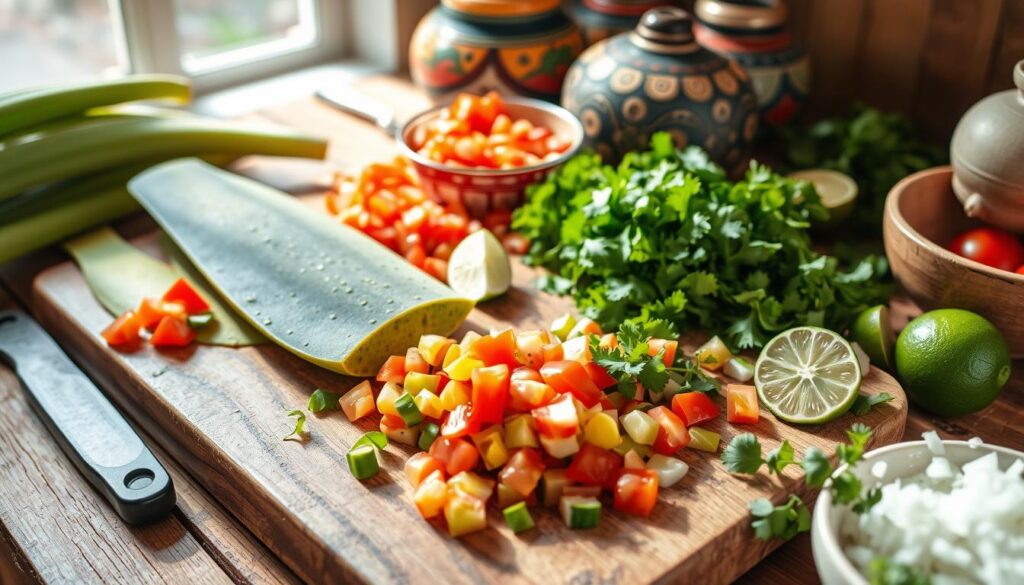
Drizzle your lime vinaigrette over the salad and gently toss. Serve right away or chill for better flavors.
Pro tip: Let the salad rest for 15 minutes before serving to allow flavors to meld together.
| Nutritional Information | Per Serving |
|---|---|
| Calories | 73 kcal |
| Protein | 2g |
| Carbohydrates | 5g |
| Fat | 7g |
| Fiber | 3g |
Tips for Removing Nopales Slime (Babas)
Dealing with nopales slime, or babas, can be tricky. This sticky substance is natural to nopales and can make cooking challenging. Fortunately, several effective methods can help you eliminate the slime and enjoy your cactus dish.
The most common techniques for removing nopales slime include:
- Boiling in salted water
- Salting and draining raw nopales
- Grilling or baking
- Sautéing
When boiling nopales, add a pinch of salt and cook for 10-15 minutes. For raw preparation, sprinkle 1-2 tablespoons of fine sea salt over diced cactus paddles. Let them sit for an hour in a colander, allowing the slime to drain naturally. Rinse thoroughly with cold water before using.
Grilling offers another excellent method for slime removal. Create cross-hatched cuts on the nopales skin, which helps the sticky substance evaporate over direct heat. Baking at 375°F for 20-30 minutes can also dry out the babas effectively.
| Method | Slime Removal Effectiveness | Time Required |
|---|---|---|
| Boiling | High | 10-15 minutes |
| Salting | Medium | 60 minutes |
| Grilling | High | 10-15 minutes |
| Baking | Medium-High | 20-30 minutes |
“Mastering nopales slime removal is key to enjoying this nutritious Mexican ingredient!” – Mexican Culinary Expert
Remember, practice makes perfect. Each method has its nuances, so experiment to find your preferred technique for cactus preparation. With these tips, you’ll transform sticky nopales into a delicious addition to your favorite dishes.
Customizing Your Cactus Salad with Additional Ingredients
Creating a unique cactus salad is a fun journey. Your Ensalada de Nopales can go from a simple side to a main dish with a few ingredients.
Protein Powerhouses
- Grilled chicken breast (sliced thin)
- Black beans for a plant-based protein boost
- Crumbled queso fresco
- Grilled tofu cubes
- Seared shrimp or fish
Vegetable Variations
Add vibrant veggies to boost flavor and nutrition:
- Roasted corn kernels
- Diced bell peppers
- Thinly sliced radishes
- Cherry tomatoes
- Pickled red onions
“The beauty of Ensalada de Nopales lies in its incredible versatility!” – Mexican Culinary Experts
Changing your protein can change the salad’s whole vibe. A veggie dish with black beans is different from one with grilled chicken. Try different combos to find your favorite!
Serving Suggestions and Pairings
Your Ensalada de Nopales becomes a versatile mexican side dish. It goes well with many traditional meals. This salad is packed with authentic mexican flavor, making it perfect for any meal.
- Grilled meats like carne asada or pollo al carbon
- Enchiladas with red or green sauce
- Tostadas topped with additional proteins
- Alongside traditional Mexican rice and beans
Nopales are great as an appetizer with crispy tortilla chips. Pro tip: The salad’s cool taste is perfect for balancing spicy dishes.
“Nopales are not just a side dish, they’re a culinary experience that connects you with traditional Mexican cuisine.” – Mexican Culinary Expert
Pair your Ensalada de Nopales with protein for a full meal. The salad’s light taste goes well with big main courses. It also adds nutrients to your meal.
| Dish Type | Recommended Pairing |
|---|---|
| Grilled Meats | Carne Asada, Pollo al Carbon |
| Seafood | Shrimp Ceviche, Grilled Fish |
| Vegetarian | Black Bean Enchiladas |
Nopales are very versatile. Your creativity can turn this simple salad into a beautiful centerpiece for your Mexican-inspired meal.
Storage Tips and Make-Ahead Instructions
Preparing Ensalada de Nopales ahead of time needs careful planning. This keeps it fresh and flavorful. Your storage method is key to keeping this Mexican dish at its best.
Proper Refrigeration Techniques
Here are important tips for storing fresh nopales:
- Store dressed salad in an airtight container
- Keep refrigerated for up to 24 hours
- Separate avocado and dressing to prevent wilting
Make-Ahead Salad Preparation
Having a plan for your salad can make meal prep easier. Cooked nopales can be stored in the fridge for 3-4 days. Here are some helpful tips:
- Cook nopales separately
- Store cooked nopales in a sealed container
- Assemble salad just before serving to maintain texture
Pro Tip: Fresh nopales taste best when eaten within 24 hours of making.
For more on vegetable prep, check out Vegan Batter’s cooking resource.
Storage Duration and Safety
| Storage Method | Duration | Quality |
|---|---|---|
| Refrigerated Cooked Nopales | 3-4 Days | Good |
| Dressed Salad | 24 Hours | Best |
| Freezing | Not Recommended | Poor Texture |
Proper storage keeps your Ensalada de Nopales tasty and safe to eat!
Conclusion
Learning to make this authentic Mexican salad opens up a world of flavors. It’s more than a recipe; it’s a deep connection to Mexican food culture. It brings both nutrition and taste to your meals.
Nopales give a unique texture and taste that makes salads special. Every bite shows how cactus paddles can make your cooking stand out. You can try new ingredients and techniques while keeping the dish’s true spirit.
This cactus salad is perfect for a light lunch, a side dish, or a healthy meal addition. Adding nopales to your cooking means you’re enjoying a piece of Mexican culinary heritage. It brings flavor and wellness to your plate.
Your skills in making Ensalada de Nopales will surely impress your loved ones. It introduces them to a delicious and healthy part of Mexican cuisine. It’s more than just a salad; it’s a culinary adventure.
F.A.Q
What are nopales, and where do they come from?
Nopales are the edible pads of the opuntia cactus, also known as prickly pear or beavertail cactus. They are a staple in Mexican cuisine, originating from Mexico. These green, paddle-shaped cactus segments are rich in nutrients and have been an important part of Mexican culinary culture for centuries.
Are nopales healthy, and what nutritional benefits do they offer?
Nopales are incredibly nutritious. They are packed with vitamins A, B, and C, and minerals like calcium, magnesium, sodium, and potassium. They are high in fiber and have been associated with potential health benefits, including blood sugar regulation, cholesterol reduction, and anti-inflammatory properties. They are a low-calorie, nutrient-dense food that can be a great addition to a healthy diet.
How do I prepare fresh nopales for a salad?
To prepare fresh nopales, select young, tender paddles that are bright green and firm. Carefully remove the spines and thorns using a knife or vegetable peeler. Trim the edges and rinse thoroughly. To remove the slimy substance (babas), boil the diced nopales in salted water for 10-15 minutes, then rinse well under cold water. This process ensures a crisp texture and removes the slime.
Can I use jarred nopales instead of fresh ones?
Yes, jarred nopales are a convenient alternative to fresh ones. While fresh nopales are preferred for their texture and flavor, jarred options are readily available and can save preparation time. Simply drain and rinse the jarred nopales before using them in your salad. However, fresh nopales will provide a crisper texture and more authentic flavor.
What are some variations I can make to the traditional Ensalada de Nopales?
You can customize the salad by adding various proteins like grilled chicken, pork, beef, seafood, or vegetarian options like black beans or tofu. Additional vegetables such as bell peppers, corn, or radishes can enhance flavor and texture. You can also experiment with different cheeses like queso fresco, cotija, or feta, and adjust the spice level by adding jalapeños or serrano peppers.
How long can I store Ensalada de Nopales?
The salad is best consumed fresh but can be stored in an airtight container in the refrigerator for up to 24 hours. For longer storage, keep the dressed salad and avocado separate. Cooked nopales can be refrigerated for 3-4 days. Avoid freezing the prepared salad, as it can negatively affect the texture. For make-ahead preparation, cook and store the nopales separately, then assemble the salad just before serving.
What dishes pair well with Ensalada de Nopales?
Ensalada de Nopales is versatile and can be served as a side dish or light main course. It pairs excellently with grilled meats, enchiladas, or as a topping for tostadas. You can serve it with tortilla chips as a refreshing appetizer or alongside rice and beans for a complete meal. Its cool, crisp texture complements spicy Mexican dishes particularly well.


