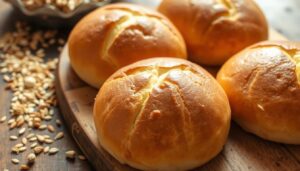
Are you tired of gluten-free bread that’s bland and crumbly? It falls apart when you try to make a sandwich. Imagine making soft, fluffy pita bread that holds together and tastes great!
This homemade gluten-free pita bread recipe is a game-changer. It’s perfect for anyone who can’t eat wheat. With just 15 minutes of prep and 10 minutes of cooking, you’ll have delicious, tender pitas. Our recipe ensures a perfect texture every time.
Recipe expert Michaela Vais created this gluten-free pita bread. It has a 4.98 out of 5 rating from 305 votes. It shows that gluten-free baking can be simple and tasty.
Key Takeaways
- Quick and easy gluten-free pita bread recipe
- Requires only 5 main ingredients
- Soft and tender texture guaranteed
- Ready in less than 30 minutes
- Versatile for multiple serving options
- Suitable for various dietary needs
- No yeast required
Understanding Gluten Free Pita Bread
Exploring gluten-free flatbread opens a world of tasty possibilities. Pita bread, a staple in Mediterranean cuisine, needs special techniques and flours to be gluten-free.

What Makes Traditional Pita Unique
Traditional pita bread is known for its pocket-like shape. It uses wheat flour for its unique texture. Gluten-free pita bread recipes face big challenges to match this beloved trait.
- Uses alternative flour blends
- Requires specialized binding agents
- Needs careful preparation techniques
Benefits of Homemade Gluten Free Pita
Making dairy-free pita at home lets you control what goes into it. You can skip preservatives and tailor the taste to your liking.
| Benefit | Description |
|---|---|
| Cost-Effective | Significantly cheaper than store-bought options |
| Ingredient Control | Choose exactly what goes into your bread |
| Freshness | Enjoy warm, just-baked pita every time |
Why This Recipe Works
Our gluten-free pita bread recipe mixes alternative flours for the right texture. Xanthan gum and specific mixing techniques make it soft and pliable, just like traditional pita.
The secret is in understanding how alternative flours behave and balancing them precisely.
By using rice flour, corn starch, and the right binding agents, you’ll make a pita that’s both tasty and true to its Mediterranean origins.
Essential Ingredients for Perfect Gluten Free Pita Bread Recipe
Making a tasty vegan pita bread needs the right ingredients. These ingredients should make the pita soft, fluffy, and safe for those with allergies. It’s important to pick the right parts to get a healthy flatbread that tastes great and feels good.

Flour Blend Components
Your gluten-free pita bread starts with a special flour mix. You’ll need:
- Gluten-free all-purpose flour
- Rice flour
- Tapioca flour
- Psyllium husk powder
Binding Agents and Leaveners
To make your pita bread rise and stay firm, use these:
- Xanthan gum
- Baking powder
- Instant potato flakes
- Sea salt
Liquid Ingredients
These liquids help your flatbread get the right moisture and feel:
| Ingredient | Purpose | Quantity |
|---|---|---|
| Warm milk | Hydration | 3/4 cup |
| Olive oil | Texture and flavor | 1 tablespoon |
| Yogurt (optional) | Softness | 1/4 cup |
Pro tip: For a vegan pita bread, use plant-based milks like almond or oat milk instead of dairy.
Choosing the right ingredients makes an allergen-friendly pita that’s healthy and tasty. The trick is to mix moisture, binding agents, and flour just right for the best gluten-free pita bread texture.
Kitchen Equipment You’ll Need
To make a tasty gluten free pita bread, you need the right baking tools and kitchen essentials. The right equipment makes baking fun and easy.

Here are the key kitchen tools you’ll need for your homemade gluten free pita bread:
- Large mixing bowl (ceramic or stainless steel)
- Digital kitchen scale for precise measurements
- Rolling pin (wooden or silicone)
- Baking sheet or pizza stone
- Parchment paper
- Skillet or cast iron pan
“The right tools transform home baking from challenging to delightful.”
Professional bakers say good tools make gluten free pita bread easier to make. A digital scale helps you measure flour accurately, which is key for gluten free recipes.
| Tool | Purpose | Recommended Type |
|---|---|---|
| Mixing Bowl | Dough preparation | Large, non-reactive |
| Kitchen Scale | Precise measurements | Digital, with grams/ounces |
| Rolling Pin | Shaping pita | Wooden with smooth surface |
| Baking Surface | Cooking pita | Pizza stone or heavy baking sheet |
Pro tip: Preheating your baking surface to 475 degrees Fahrenheit helps achieve that perfect pita pocket!
Mastering the Dough Preparation
Making the perfect gluten-free dough is an art. It needs precision and care. Your healthy pita recipe starts with knowing gluten-free ingredients and how they act during preparation.
Mixing Techniques for Smooth Gluten-Free Dough
To make quick pita bread, mix dry ingredients well. Your gluten-free dough needs careful mixing for even ingredient distribution. Use a whisk or electric mixer to mix flours and leavening agents fully.
- Sift dry ingredients to remove lumps
- Use warm water (around 110°F) to activate yeast
- Mix wet and dry ingredients gradually
Kneading and Resting: The Secret to Texture
Patience is key when working with gluten-free dough. Unlike traditional bread, it needs gentle handling. Knead the dough for 3-5 minutes, then let it rest for at least 1 hour. This helps develop flavor and texture.
“The magic happens during rest time – let your dough rise and develop its character.”
Achieving the Perfect Dough Consistency
Your gluten-free dough should be slightly sticky but easy to handle. If it’s too dry, add warm water a teaspoon at a time. The dough should be smooth and elastic, able to hold its shape without cracking.
| Dough Characteristic | Ideal Result |
|---|---|
| Moisture | Slightly sticky |
| Elasticity | Smooth and stretchy |
| Resting Time | 1 hour minimum |
Rolling and Shaping Techniques
Shaping easy pita bread is all about precision and patience. Start by dividing the dough into equal parts. This will help you make perfectly portioned balls that turn into tasty pita rounds.
Here are the key steps for shaping pita dough:
- Divide the dough into 5-6 equal portions
- Roll each portion into a smooth ball
- Use a rolling pin with adjustable thickness guides for consistent results
- Dust your work surface with gluten-free flour to prevent sticking
Rolling out your pita needs a gentle touch. Press each ball into a 6-8 inch circle, keeping it about a quarter-inch thick. This step is crucial for your pitas to puff up well in the oven.
| Shaping Technique | Key Considerations |
|---|---|
| Dough Portioning | Divide into 5-6 equal parts |
| Rolling Thickness | Aim for 1/4 inch consistently |
| Diameter | 6-8 inches per pita |
“The secret to perfect pita is in the shaping – patience creates perfection!”
Pro tip: Be gentle with your gluten free flatbread dough. Don’t overwork or stretch it, as this can lead to tears and prevent puffing. With practice, you’ll make restaurant-quality pitas every time.
Cooking Methods and Temperature Control
Mastering gluten-free pita baking needs precision in cooking and temperature control. You must understand the techniques that turn simple ingredients into perfect pita bread.
You can cook pita bread in two main ways: oven baking and stovetop cooking. Each method has its own benefits for making delicious gluten-free flatbreads.
Oven Baking Techniques
Oven baking gives even heat for your gluten-free pita. Preheat your oven to 450°F (230°C). Here are some key tips:
- Use a preheated baking stone or steel for the best results
- Bake pitas for 3-4 minutes until they slightly puff
- Keep an eye on them to avoid overcooking
Stovetop Cooking Options
Stovetop cooking lets you control the temperature closely. A non-stick skillet is ideal for getting beautiful brown marks.
| Cooking Method | Temperature | Cooking Time |
|---|---|---|
| Oven Baking | 450°F | 3-4 minutes |
| Stovetop | Medium Heat | 2-3 minutes per side |
Pro tip: Rotate your pita midway through cooking to ensure even browning and perfect texture.
Gluten-free pita needs gentle handling. Aim for a soft, lightly puffed bread with a delicate golden-brown outside.
Storage and Reheating Guidelines
Keeping your homemade gluten-free pita bread fresh is key. The right storage methods can help your bread stay great.
For a short time, store your pita in an airtight container at room temperature. It will stay fresh for 2-3 days. This way, you can enjoy it all week.
Storage Options
- Room temperature storage: Up to 3 days
- Refrigerator storage: Not recommended
- Freezer storage: Up to 3 months
Reheating your pita can be done in several ways. The best is to warm it up in the oven. Try heating at 350°F for 5-7 minutes.
Freezing Techniques
Freezing is a great way to keep gluten-free bread fresh. Wrap each pita in plastic wrap, then in a freezer bag. This stops freezer burn and makes thawing simple.
| Storage Method | Duration | Recommended Technique |
|---|---|---|
| Room Temperature | 2-3 days | Airtight container |
| Freezer | Up to 3 months | Individual plastic wrap |
“Proper storage is the key to maintaining the delightful texture of your gluten-free pita bread.” – Gluten-Free Baking Experts
Pro tip: Before reheating, lightly sprinkle water on the pita. This helps keep it moist and prevents drying. Your gluten-free pita will taste almost as fresh as when you baked it!
Serving Suggestions and Pairings
Your homemade gluten-free pita bread opens up a world of culinary possibilities. These versatile flatbreads can transform your meals. They make gluten-free meals exciting and flavorful.
Traditional Mediterranean Accompaniments
Embrace the authentic flavors of Mediterranean cuisine by pairing your pita bread with classic dips and spreads. Here are some traditional pita bread uses:
- Creamy hummus with olive oil drizzle
- Smoky baba ganoush
- Cool and tangy tzatziki sauce
- Part of a vibrant mezze platter
Modern Serving Ideas
Reinvent your pita bread with these innovative serving suggestions. They go beyond traditional preparations:
- Create personal mini pizzas using pita as a base
- Cut into crispy chips for dipping
- Use as a wrap for sandwiches and protein-packed fillings
- Serve alongside soups and salads
“Pita bread isn’t just a side dish—it’s a culinary canvas waiting to be explored!” – Mediterranean Cooking Enthusiast
| Serving Style | Suggested Pairings |
|---|---|
| Appetizer | Hummus, olive tapenade |
| Main Course | Falafel, grilled vegetables, chicken |
| Snack | Pita chips with salsa, guacamole |
Your gluten-free pita bread is not just a meal component—it’s an adventure in flavor and creativity!
Conclusion
Making the perfect gluten-free pita bread takes time and effort. With 3.1 million Americans on a gluten-free diet, your homemade pita can be a kitchen game-changer. Learning about gluten-free baking techniques helps you make tasty flatbreads that compare to store-bought ones.
The demand for gluten-free baking products has increased by 28% in recent years. Making your own pita can save you up to 40% compared to buying it. The secret is to try different flour blends like Better Batter or Bob’s Red Mill for the right texture and taste.
As you get better at gluten-free baking, your skills will grow. Whether you have celiac disease or just want to try something new, homemade pita bread is a great choice. Remember, the more you practice, the closer you’ll get to making the perfect gluten-free flatbread that you’ll love.
Starting this gluten-free pita bread journey means more than just making a recipe. It’s about creating a delicious solution that meets today’s dietary needs while keeping tradition alive. Your kitchen will become a place of creativity and innovation in nutrition.
F.A.Q
What is the main difference between traditional and gluten-free pita bread?
Traditional pita bread uses wheat flour, which has gluten. Gluten-free pita bread uses flours like rice and tapioca. It needs special ingredients to feel and look like regular pita bread.
How long does it take to make gluten-free pita bread?
Making this gluten-free pita bread is quick. It takes less than 30 minutes to prepare. You can make it in under an hour, from start to finish.
Can I freeze gluten-free pita bread?
Yes, you can freeze it for up to 3 months. Keep it in an airtight container or bag. Use parchment paper to keep it from sticking. Thaw and reheat when you want to use it.
What equipment do I need to make gluten-free pita bread?
You’ll need a bowl, a mixer, a rolling pin, and a baking sheet. A kitchen scale is also good for exact measurements. You might also use a skillet for cooking.
How do I store homemade gluten-free pita bread?
Keep it in an airtight container or bag at room temperature for 2-3 days. Freeze for longer storage. Reheat by brushing with water to keep it soft.
What are some serving suggestions for gluten-free pita bread?
It’s great with many things. Try it with hummus, baba ganoush, or tzatziki. You can also stuff it with falafel, chicken, or veggies. Use it for personal pizzas, cut into chips, or as a sandwich wrap.
Can I make this recipe dairy-free or vegan?
Yes, it’s easy to make dairy-free or vegan. Use non-dairy milk and egg substitutes like flax eggs. Always check your ingredients for dietary needs.
Why is psyllium husk important in gluten-free baking?
Psyllium husk helps bind the dough, like gluten does. It makes the bread more like traditional bread, keeping it moist and soft.
What alternative flours can I use in this pita bread recipe?
You can try different flours like almond or coconut. But remember, each flour changes the taste and texture. You might need to adjust the liquid amounts.
How can I ensure my gluten-free pita bread puffs up properly?
For a puffy pita, make sure the dough is even and about 1/4 inch thick. Use the right leavening agents and cook at high heat. This helps create the perfect pocket and texture.