Are you ready to learn how to make the perfect paratha at home? This recipe has been shared over 5.9K times. It shows that many people want to master making this tasty Indian flatbread. You’ll find out what ingredients and techniques are needed to make a delicious paratha.
You can also check out other recipes on paratha recipe websites for more ideas.
Key Takeaways
- Understanding the right ratio of ingredients is crucial for a perfect paratha recipe
- Cooking time and temperature adjustments are essential for optimal puffing
- Resting time for the dough is vital for proper hydration and tenderness
- Adding curd or yogurt can make your parathas softer
- Experimenting with different fillings and spices can elevate your paratha game
- Practicing the layering technique can help you achieve a flaky and crispy texture
- Cooking on medium to high heat on a tawa or skillet is recommended
Understanding Paratha: A Traditional Indian Flatbread
Paratha is a favorite in many Indian homes, enjoyed with curries and chutneys. To make a tasty homemade paratha, knowing its origins and cultural value is key. Online, you can find recipes for a crispy paratha that’s both crunchy and flavorful.
A traditional paratha recipe includes flour, water, and sometimes oil or ghee. The dough rests to develop gluten, which makes the paratha crispy. Using the right ingredients and techniques is crucial for a flaky texture.
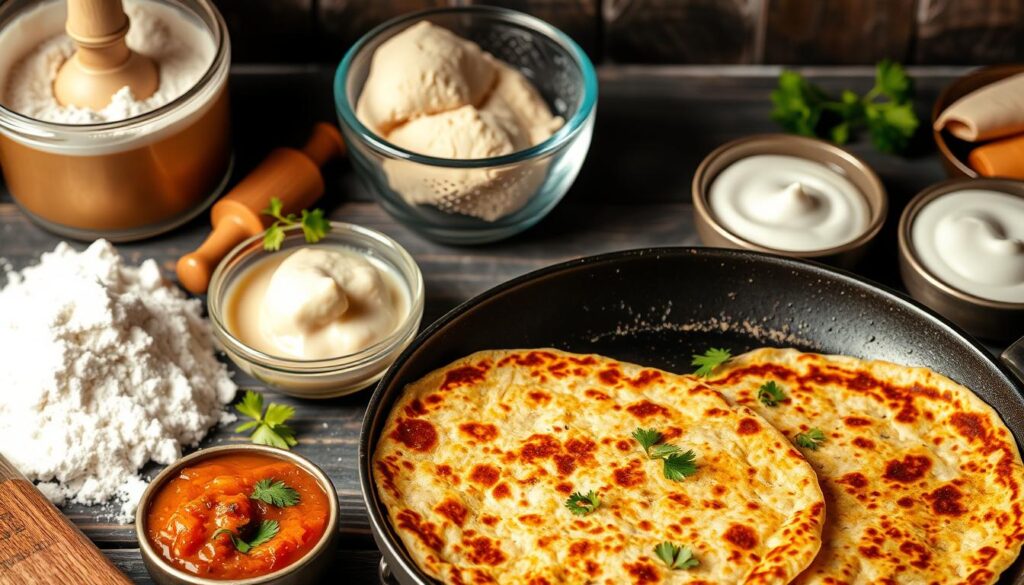
Popular parathas include plain, stuffed, and layered ones. The secret to a perfect paratha is the right water amount and dough resting time. With practice, you can make delicious parathas that are crispy outside and soft inside.
Origins and Cultural Significance
Parathas hold a special place in Indian culture, enjoyed as breakfast or a snack. They’re also a hit on Indian streets. To make a true paratha, understanding its cultural roots and traditional making methods is vital.
Different Types of Parathas
There are many paratha varieties, each with its own taste and texture. Favorites include aloo paratha, paneer paratha, and mixed vegetable paratha. You can also try different fillings and toppings to create your own paratha.
What Makes a Perfect Paratha
A perfect paratha is crispy outside and soft inside. Achieving this requires the right ingredients and techniques. Resting the dough and cooking at the right temperature are key. With practice, you can make parathas that are perfect for any time.
Essential Ingredients for Your Paratha Recipe
To make a simple paratha recipe, you need a few key ingredients. These are whole wheat flour, salt, water, and ghee or oil. The quality of these can change how your parathas taste and feel.
A delicious paratha recipe begins with the right stuff. Here’s what you’ll need:
- Whole wheat flour
- Salt
- Water
- Ghee or oil
Learning how to make paratha means knowing each ingredient’s role. Whole wheat flour adds fiber and texture. Salt boosts the flavor. Water makes the dough smooth, and ghee or oil adds taste and softness.
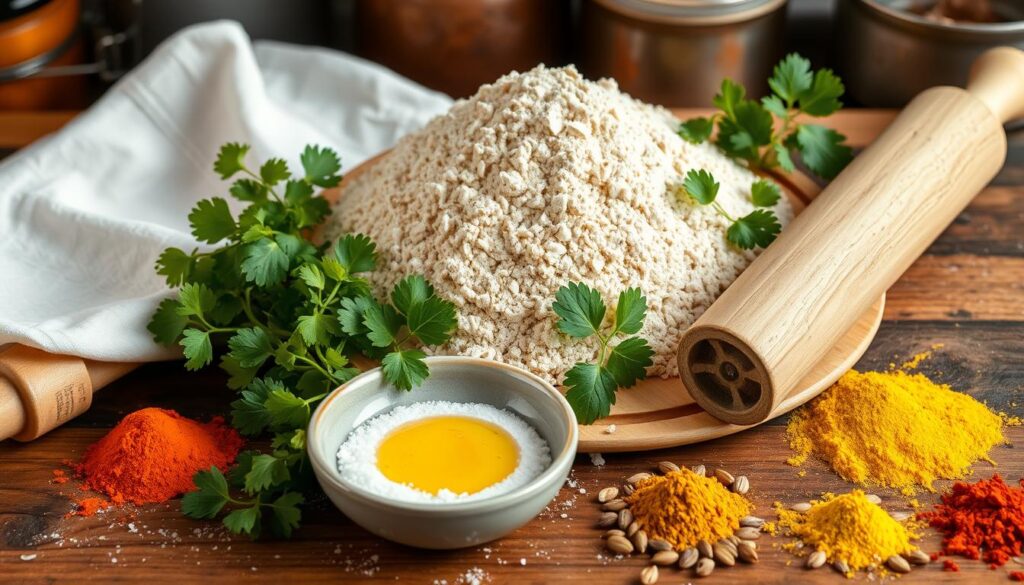
Using these key ingredients, you can whip up a simple paratha recipe that’s tasty and true to its roots. Always pick high-quality ingredients for the best taste and texture.
| Ingredient | Quantity | Importance |
|---|---|---|
| Whole wheat flour | 2 cups | Provides fiber and texture |
| Salt | 1 teaspoon | Enhances flavor |
| Water | 1 cup | Creates a smooth dough |
| Ghee or oil | 2 tablespoons | Adds flavor and tenderness |
Kitchen Tools and Equipment You’ll Need
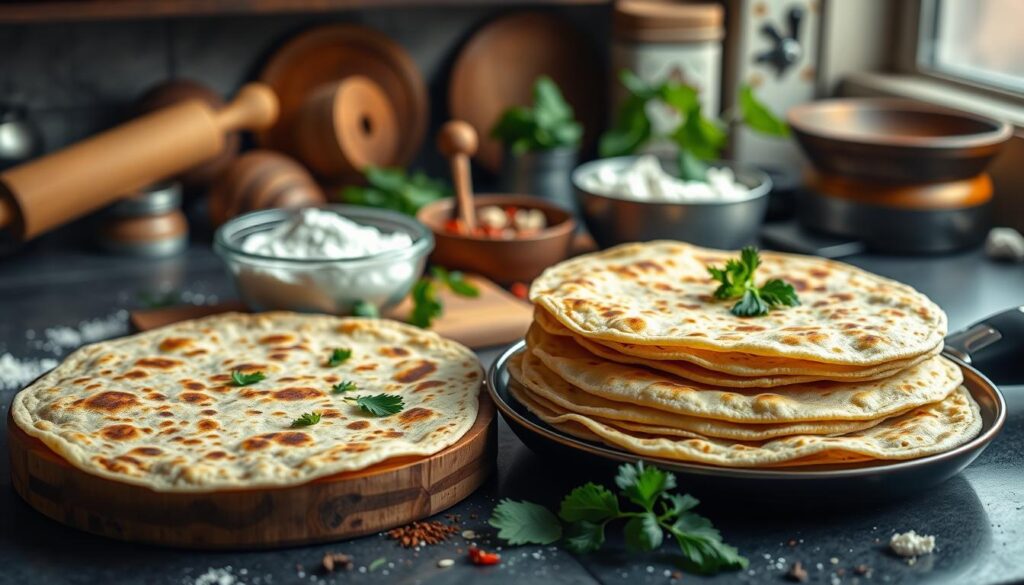
To make delicious homemade paratha, you’ll need the right tools and equipment. Traditional tools include a rolling pin, a rolling board, and a tawa or griddle. These tools help you get the perfect crispy and flaky texture.
Having the right equipment is key when making parathas. You can check out veganbatter.com for more on kitchen tools. Modern tools like a stand mixer and a food processor can also help with kneading and rolling out the dough.
Traditional Tools
- Rolling pin
- Rolling board
- Tawa or griddle
Modern Alternatives
- Stand mixer
- Food processor
Optional Equipment
Optional tools include a dough cutter and a pastry brush. These are used to cut and brush the parathas with ghee or oil. With the right tools, you can make delicious homemade paratha with a crispy and flaky texture.
| Tool | Description |
|---|---|
| Rolling pin | Used to roll out the dough |
| Rolling board | Used to roll out the dough |
| Tawa or griddle | Used to cook the parathas |
Preparing the Perfect Paratha Dough
To make a delicious stuffed paratha recipe, start with the perfect dough. A great paratha dough has whole wheat flour, salt, water, and ghee or oil. For a whole wheat paratha recipe, you need 3 cups of flour, 2 tablespoons of oil, and 1 teaspoon of kosher salt. You’ll also need about 1¼ cups of water, maybe more.
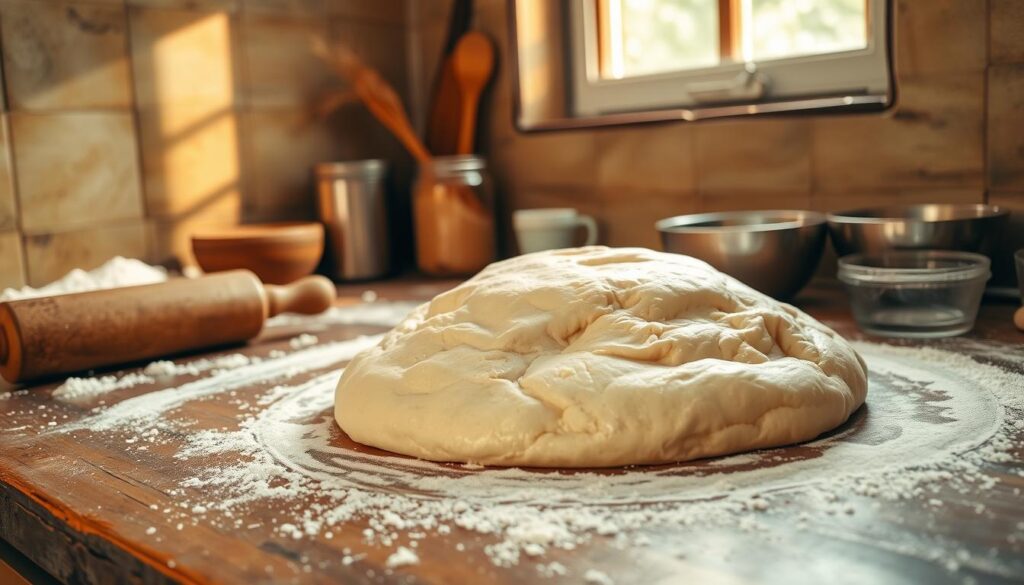
Kneading the dough is key. Knead for 4 to 5 minutes to get a smooth texture. Let it rest for 20 minutes after kneading. This makes the dough easier to roll out.
- Use the right amount of water, as excess water can make the dough too sticky.
- Knead the dough long enough to develop the gluten.
- Let the dough rest for the recommended time to allow the gluten to relax.
- Divide the dough into the right number of parts to achieve the perfect size for your parathas.
By following these tips and using the right ingredients, you can create the perfect paratha dough. This is great for your favorite stuffed paratha recipe, whole wheat paratha recipe, or flaky paratha recipe.
| Ingredient | Quantity |
|---|---|
| Whole wheat flour | 3 cups |
| Oil | 2 tablespoons |
| Kosher salt | 1 teaspoon |
| Water | 1¼ cups |
Step-by-Step Basic Paratha Recipe
To make a delicious paratha, follow a simple recipe. Start by mixing the dough, a key step. Use the right ingredients and techniques for a perfect paratha.
Let the dough rest for 15-20 minutes after mixing. This makes it easier to roll out. Divide the dough into smaller portions and roll each into a thin circle. Use a rolling pin for the perfect shape.
Heat a non-stick tawa or griddle over medium heat. Place a paratha on the tawa and cook for 3-4 minutes on each side. Brush with oil or ghee for extra flavor. Cook at 375 degrees Fahrenheit for a perfect paratha.
Mixing the Dough
Mixing the dough is crucial. Combine flour, water, and other ingredients for a smooth dough. Use wheat and all-purpose flour for a healthy paratha.
Rolling Techniques
Rolling out the dough is key. Use a rolling pin and apply even pressure. This avoids wrinkles or tears.
Cooking Methods
Cooking the paratha is the final step. Cook on a non-stick tawa or griddle, or in an oven. Cook at the right temperature and time for the perfect texture and flavor. Add cumin seeds or fresh herbs for extra taste.
For more paratha recipe tips, visit this website. With practice, you can make a delicious paratha using a simple recipe.
Mastering the Layering Technique
To make a tasty homemade paratha, you need to get the layering right. This means folding and rolling the dough to build layers. These layers make the paratha crispy and flaky.
Choosing the right ingredients and techniques is key for a great paratha. Using whole wheat flour adds a healthier twist. Ghee or oil for layering makes it crispy and golden.
Here are some tips for mastering the layering technique:
- Use the right amount of oil or ghee for layering, as this will help create a crispy texture.
- Fold and roll the dough multiple times to create multiple layers.
- Use a gentle touch when rolling out the dough to avoid tearing it.
For more info on making tasty parathas, check out Chef Ajay Chopra’s website. It has many recipes, like the onion laccha paratha. Follow these tips to make a homemade paratha that will wow your loved ones.
Remember, the more you practice, the better you’ll get. Even if your first parathas don’t turn out perfectly, keep trying. Soon, you’ll be making delicious, crispy parathas that everyone will love.
Popular Paratha Variations and Stuffings
There are countless ways to make parathas. You can start with a basic recipe or try out different variations. You can fill them with aloo (potato), paneer, or mixed vegetables.
Aloo paratha is a favorite, often seen as the essence of stuffed parathas. Other favorites include gobhi paratha, puran poli, and sattu paratha. With over 51 types, you can pick from savory to sweet fillings.
Some top paratha variations are:
- Aloo paratha: a classic stuffed paratha with spiced potatoes
- Paneer paratha: a delicious variation with Indian cheese
- Mixed vegetable paratha: a colorful and healthy option with a mix of vegetables
To make these parathas, follow a simple recipe and add your favorite stuffing. With practice, you’ll get the hang of making tasty parathas at home. For more ideas, check out veganbatter.com.
The secret to perfect parathas is using the right ingredients and techniques. With patience and practice, you’ll wow your family and friends. So, try out different variations and stuffings to find your go-to paratha recipe.
| Paratha Variation | Stuffing | Description |
|---|---|---|
| Aloo Paratha | Spiced Potatoes | A classic stuffed paratha with spiced potatoes |
| Paneer Paratha | Indian Cheese | A delicious variation with Indian cheese |
| Mixed Vegetable Paratha | Mix of Vegetables | A colorful and healthy option with a mix of vegetables |
Troubleshooting Common Paratha Problems
When making homemade paratha, you might face some common issues. These can mess up the texture and taste of your parathas. To get a crispy paratha or flaky paratha, it’s key to know how to fix these problems.
Some common problems include a dense or hard paratha and issues with cooking, like burning or undercooking. To fix these, try adjusting the dough’s consistency, using the right amount of ghee, and cooking at the right temperature.
Texture Issues
- Check the dough consistency: it should be soft and pliable, but not too sticky or too dry.
- Use the right amount of ghee: too much or too little can change the paratha’s texture.
- Rest the dough: letting it rest for 15-20 minutes can make the paratha softer.
By following these tips, you can make a delicious and flaky paratha. It’s great with your favorite fillings or sides. Remember, making homemade paratha takes practice, so don’t get discouraged if it’s not perfect at first.
Tips for Achieving Crispy and Flaky Texture
To get a crispy and flaky paratha, use the right ingredients and techniques. For a stuffed paratha recipe, whole wheat atta is key. It gives a crispy outside and a soft inside. Mixing whole wheat and all-purpose flour, 70% to 30%, makes a whole wheat paratha recipe that’s both crispy and flaky.
Layering is crucial for a crispy and flaky texture. Traditional parathas have 2 or 3 layers. Laccha parathas have a spiraled shape with many layers. To make a flaky paratha recipe, roll and fold the dough many times. This creates layers of butter and dough, making the paratha crispy and flaky when cooked.
Here are some more tips for a crispy and flaky texture:
- Use the right amount of water when making the dough, as too little water can lead to a tough paratha.
- Add a tablespoon of ghee or yogurt to the dough to enhance the softness and crispness of the paratha.
- Rest the dough for at least 10-15 minutes to allow the gluten to relax and the dough to become easier to roll.
- Cook the paratha on a preheated tawa or griddle, and flip it after 10-15 seconds to create a crispy exterior and a soft interior.
By following these tips and using the right ingredients and techniques, you can make a crispy and flaky paratha. It’s perfect for serving with your favorite dishes. Whether you’re making a stuffed paratha recipe, a whole wheat paratha recipe, or a flaky paratha recipe, the secret is using the right ingredients and techniques, and cooking with care.
Conclusion: Perfecting Your Paratha-Making Skills
Making the perfect paratha takes time, patience, and a willingness to try new things. Follow the step-by-step paratha recipe and fix any problems that come up. This will help you get better at making parathas.
Getting the dough right, layering it well, and cooking it just right are key. Don’t worry if your first parathas aren’t perfect. With each try, you’ll get better and more confident.
Try different kinds of parathas like aloo, paneer, or mixed vegetable. With practice, your parathas will get flakier and tastier. So, what are you waiting for? Start making parathas and enjoy the delicious results of your hard work. Happy paratha-making!
F.A.Q
What is a paratha?
Parathas are flatbreads made from whole wheat flour, salt, water, and ghee or oil. They are unleavened and layered.
What is the cultural significance of parathas in India?
Parathas hold a special place in Indian culture. They have a rich history and many regional flavors.
What are the different types of parathas?
There are many types of parathas. You can find plain, stuffed, and layered parathas. Each has its own taste and texture.
What are the essential ingredients needed to make parathas?
To make parathas, you need whole wheat flour, salt, water, and ghee or oil. These are the basic ingredients.
What kitchen tools and equipment are needed to make parathas?
You’ll need a rolling pin, a rolling board, and a tawa or griddle to make parathas. You can also use modern tools and optional equipment.
How do you prepare the perfect paratha dough?
To make the perfect dough, mix the ingredients well. Then knead the dough until it’s smooth. Let it rest for a while before using it.
What is the step-by-step process for making basic parathas?
Making basic parathas involves mixing the dough, rolling it out, and cooking it. Use a tawa or griddle to get the right texture and flavor.
How do you master the layering technique for parathas?
To master layering, fold and roll the dough carefully. This creates the perfect layers and texture.
What are some popular paratha variations and stuffings?
Popular parathas include aloo (potato) paratha, paneer paratha, and mixed vegetable paratha. Each has its own flavors and fillings.
How do you troubleshoot common paratha problems?
Troubleshooting paratha problems involves addressing texture issues, cooking challenges, and storage. Use proper techniques and methods to solve these problems.
What are the tips for achieving a crispy and flaky paratha texture?
For a crispy and flaky texture, use the right ingredients and techniques. Proper kneading, rolling, and cooking are key.